Best Door Alarms for Hearing Impaired People: Door, Window & Perimeter Alerts
A standard door alarm relies on a loud audible siren - which is exactly the alert channel that fails people with hearing loss. This guide explains how magnetic contact sensor systems work, which entry points matter most, and how to build silent wrist-vibration door and window alerting that covers your whole home.
Door alarms for hearing-impaired people use magnetic contact sensors on doors and windows that trigger instant wrist vibration and icon alerts, providing silent home security for those who cannot rely on audible chimes or buzzers. They require no professional installation, no permanent modification, and no internet connection - the alert chain runs entirely over Bluetooth from sensor to wrist.
- Why standard door alarms fail people with hearing loss
- How magnetic contact sensor alerts work
- Which entry points matter - and in what order
- Bellman's door alarm range: what's available
- Door alarm vs doorbell alert: understanding the difference
- Who benefits most from a door alarm system
- Setup: no tools, no wiring, no professional needed
- Night coverage: what happens when you're asleep
- Building a whole-home perimeter alert system
- Frequently asked questions
Why Standard Door Alarms Fail People with Hearing Loss
Most home security door alarms - the kind sold at hardware stores - work the same way: a magnetic sensor detects when a door or window opens and triggers an audible siren, typically ranging from 85 to 110 decibels. For someone with normal hearing, that's impossible to miss. For someone who is profoundly deaf, or who removes their hearing aids at home or during sleep, it's completely ineffective.
The gap isn't just about volume. Even at maximum output, an audible-only alarm assumes the person will hear the sound, process it as a warning, and respond. None of that pathway works when the alert channel itself is inaccessible. And the two situations when door and window security matters most - nighttime and the moments when you're most absorbed in another activity - are precisely when hearing aids come out and auditory awareness drops to its lowest point.
The solution isn't a louder siren. It's a different alert channel entirely - one that delivers the notification through tactile vibration directly to the body, regardless of hearing aid use, ambient noise, or time of day. That's what a purpose-built door alarm system for hearing-impaired people provides.
How Magnetic Contact Sensor Alerts Work
A contact sensor door alarm system has a simple, reliable architecture. Understanding how each piece works makes choosing and placing the right components straightforward.
Magnetic Contact Sensor
Two small components - a transmitter and a magnet - are placed on a door or window frame and the door or window itself. When the door is closed, the magnet keeps a reed switch inside the transmitter in the closed (inactive) position. The moment the door opens and the two parts separate, the circuit breaks and the transmitter immediately fires a wireless alert signal.
Bluetooth Bridge
The Bellman Bluetooth Bridge receives the wireless signal from the contact sensor and relays it instantly to all paired receivers. The same bridge that handles your doorbell transmitter, smoke detector transmitter, and push button transmitter also handles door and window contact sensors - one hub for every alert type in your home.
Watch Receiver
The Bellman Bluetooth Watch Receiver worn on your wrist vibrates and displays a distinct icon the moment a door or window sensor fires. If multiple sensor types are paired, each shows its own unique icon - so you always know which entry point has opened without needing to investigate every room.
Smartphone App (Optional)
The Bellman Connect app can deliver a simultaneous push notification to your smartphone as a secondary alert channel. As always, the wrist receiver is the primary method - it works without internet, without the phone being nearby, and without any app. Smartphone alerts are a useful supplement, not a replacement for the on-body wrist vibration.
The alert chain - contact sensor to Bluetooth Bridge to Watch Receiver - operates entirely over Bluetooth and requires no Wi-Fi, no home network, and no cloud service. Your wrist alert fires even if your router is off, your internet service is down, or there is a power outage affecting your modem. The Bridge requires a wall outlet, but the core alert path itself is network-independent.
Which Entry Points Matter - and in What Order
Not every door and window carries the same security or safety priority. When building a door alarm system for hearing-impaired people, it helps to start with the highest-value entry points and expand from there.
-
Front door - Priority 1
The most frequently used and most visible entry point. A contact sensor on the front door covers both unexpected arrivals and the everyday awareness of who is coming and going. For many households, this works alongside a doorbell transmitter - the sensor alerts you when the door actually opens, while the doorbell transmitter alerts you when someone is at the door before opening it.
-
Back door - Priority 1
Back doors are statistically the most common point of entry in residential break-ins, and they're the entry point least likely to be covered by a front-door-focused doorbell alert. A contact sensor on the back door closes this gap completely, with the same wrist alert as every other sensor in the system.
-
Bedroom door - Priority 2
For households with children, elderly family members, or anyone who may wander at night, a bedroom door sensor provides immediate wrist notification when the door opens during sleeping hours. This is particularly valuable for parents of deaf children who need to know when a child has left their room, or for anyone caring for a person with dementia or a sleep condition who may get up and move around at night.
-
Ground-floor windows - Priority 2
Ground-level windows are the third most common residential entry point after front and back doors. Contact sensors for windows work identically to door sensors - the same magnetic separation trigger, the same wrist alert. For homes in urban areas or ground-floor apartments, window sensors add a meaningful second layer to door-only coverage.
-
Garage and utility entries - Priority 3
Internal doors connecting a garage, utility room, or basement to the main living area are frequently overlooked in home security planning. These secondary entry points - which may not have a dedicated lock visible from the main living space - benefit from contact sensor coverage, particularly in homes where the garage door itself is accessible from outside.
-
Garden gate and outbuildings - Priority 3
For households with a garden gate, a side access point, or a detached outbuilding used as a workshop or studio, perimeter coverage at the property boundary provides earlier warning than interior door sensors alone. A contact sensor at the gate means you know someone has entered the property before they reach the house.
Bellman's Door Alarm Range: What's Available
Bellman's door alarm collection covers the full range of residential entry-point monitoring needs, from single-door contact sensors to multi-point window and perimeter coverage. Every sensor in the range connects to the same Bluetooth Bridge and delivers alerts to the same Watch Receiver - meaning you build one integrated system rather than separate devices for separate doors.
The Bellman Bluetooth Bridge supports multiple paired transmitters simultaneously - door sensors, window sensors, your front doorbell transmitter, a smoke detector transmitter, and a push button, all connected to the same bridge. The Watch Receiver on your wrist shows a distinct icon for each type. You don't buy a new receiver for each new sensor type. You expand the same integrated system.
Browse the complete door alarms collection to see all available contact sensor options and find the right fit for each entry point you want to cover.
Door Alarm vs Doorbell Alert: Understanding the Difference
People new to hearing loss alerting systems sometimes conflate door alarms and doorbell alert systems. They solve related but distinct problems, and understanding the difference helps you build the right coverage for your home.
Alerts you when someone is outside your door and wants your attention. The transmitter detects the sound of your existing chime (or uses a push button), and the Watch Receiver vibrates so you know to go to the door. The door has not yet opened. This is a visitor notification system.
Alerts you when a door or window actually opens. The contact sensor detects the physical separation of the door from the frame. The Watch Receiver vibrates the moment entry occurs - whether expected or unexpected. This is a perimeter monitoring and security awareness system.
For complete home coverage, both systems working together make sense: the doorbell transmitter tells you someone is outside before they enter; the contact sensor tells you a door has opened. Together they cover the full visitor and security awareness loop - from someone pressing the doorbell, to the moment the door physically opens, to any other entry point in the home.
For a detailed look at how doorbell alert systems work and which type is right for your home, see: Best Doorbell Systems for Deaf & Hard of Hearing People: Complete Buyer's Guide (2026).
Who Benefits Most from a Door Alarm System
Door alarm systems for hearing impaired people serve a broader range of households than is often assumed. The core use case - knowing when a door or window has opened - is genuinely valuable for a wide range of situations beyond straightforward home security.
Profoundly Deaf Individuals
When no auditory security system is accessible, a wrist vibration alert is the most reliable way to be notified of entry events in real time. Door contact sensors paired with a Watch Receiver give profoundly deaf people the same home security awareness that hearing people get from audible alarms - without requiring any hearing at all.
Older Adults Living Alone
For older adults who remove hearing aids at home - during naps, in the evening, while bathing - a contact sensor system provides security awareness during those vulnerable windows. The wrist alert reaches them in any room, regardless of whether their hearing aids are in, making it a meaningful safety layer for independent living.
Parents with Deaf or Hard-of-Hearing Children
Parents who are deaf or hard of hearing may struggle to be aware of a child leaving through a door at night or entering a potentially hazardous area. A contact sensor on a child's bedroom door, the front door, or any room with a safety risk provides immediate wrist notification the moment the door opens.
People with Anxiety or PTSD
Knowing when a door or window opens - without needing to actively monitor it - reduces the need for constant visual checking and provides reliable awareness of the home perimeter. For people with anxiety or PTSD who benefit from knowing their space is secure, a wrist-alert door sensor system provides that reassurance passively and consistently.
Caregivers for Wandering Risk
For caregivers of individuals with dementia or other conditions that create a wandering risk, a contact sensor on any exit door provides an instant wrist alert the moment the door is opened - day or night. This is one of the highest-value use cases for door alarm systems in a caregiving context, providing a critical early-warning layer that audible-only alarms cannot reliably deliver to a sleeping caregiver.
Renters and People Who Cannot Modify Their Home
Because contact sensors attach with removable adhesive and require no drilling, wiring, or permanent installation, they work in rental properties, apartments, and any home where permanent modifications are not permitted. The entire system is removable and portable - the Watch Receiver and Bridge go with you when you move.
Setup: No Tools, No Wiring, No Professional Needed
One of the most practical advantages of the Bellman door alarm system is how simple it is to install. There is no electrical work, no smart home hub configuration, and no technical knowledge assumed. Setup follows the same straightforward pattern as all Bellman alert components.
From unboxing to working door alert in under 10 minutes
Works on any door or window frame. No tools or drilling required.
- Attach the contact sensor transmitter to the door or window frame using the included adhesive strip - no drilling required
- Attach the magnet component to the door or window itself, aligned with the transmitter
- Plug the Bluetooth Bridge into any standard wall outlet in a central location
- Follow the simple pairing steps in the instruction booklet to link the contact sensor to the Bridge (1–2 minutes)
- Pair the Watch Receiver to the Bridge if not already done (1–2 minutes)
- Test by opening the door or window - the Watch Receiver should vibrate and show the door icon within 1–2 seconds
- Repeat for each additional entry point you want to monitor
- Optionally: pair the Bellman Connect app to your smartphone for simultaneous push notifications
If you already have a Bellman Bluetooth Bridge and Watch Receiver from a doorbell or push button system, adding door contact sensors is simply a matter of pairing the new sensor transmitters to your existing Bridge. No new receivers. No new hub. The same watch on your wrist handles every new sensor you add.
For a full step-by-step pairing and placement walkthrough, see our installation guide: How to install a doorbell alert system for hearing impaired: no electrician needed.
Night Coverage: What Happens When You're Asleep
Nighttime is when home security awareness matters most - and when hearing loss creates the biggest gap. Hearing aids out, ambient noise down, deep sleep in: a deaf or hard-of-hearing person in this state has essentially no awareness of what's happening at any door or window in the home.
The Watch Receiver worn during sleep provides wrist-vibration alerting for door and window events overnight. Many users find the watch comfortable to sleep in after a few nights of adjustment. But for those who prefer not to wear the watch while sleeping, or who need a more powerful overnight alert, Bellman's sleep bundles offer a bed shaker solution.
Sleep Bundles with Bed Shaker for Overnight Door Alerting
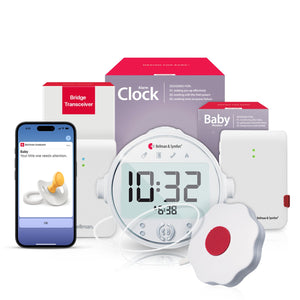
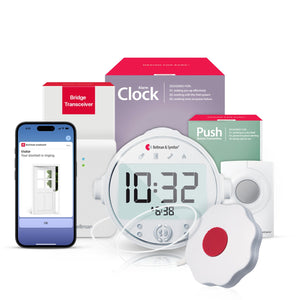
The Bridge + Door Transmitter + Alarm Clock bundle pairs the Bluetooth Bridge and a door transmitter with a Bellman Alarm Clock that includes a built-in bed shaker. The bed shaker goes under your mattress and vibrates the entire bed when a door sensor fires - far more reliable for waking a sleeping person than wrist vibration alone.
- Bridge + Door Transmitter + Alarm Clock - overnight door alerting with bed shaker wake-up
- Bridge + Smoke/Fire Monitor + Alarm Clock - overnight fire and CO alerting with bed shaker
- Bridge + Baby Monitor + Alarm Clock - overnight baby monitor alerts with bed shaker
- Bridge + Push Button + Alarm Clock - overnight call-for-attention button with bed shaker
If you already have a Bridge and want to add overnight coverage, the Watch Receiver can be used during the day and the Alarm Clock bed shaker used overnight - the same Bridge drives both simultaneously.
- Hearing aids removed = zero auditory security awareness
- Audible door alarms (85–110 dB sirens) ineffective for profoundly deaf sleepers
- Smartphone notifications don't reliably penetrate deep sleep
- Strobe lights require eyes open and line-of-sight - ineffective in the dark
- Wrist vibration during sleep is effective; some users find it sufficient alone
- Bed shaker is the most reliable overnight wake method for deaf and hard of hearing people
Building a Whole-Home Perimeter Alert System
A whole-home perimeter alert system sounds complex. In practice, with the Bellman ecosystem, it's a straightforward layering process - each new sensor pairs to the same Bridge and alerts to the same watch. You can start with one door and expand as your needs and budget allow.
A Practical Build Sequence
Every component in this build uses the same Bluetooth Bridge and the same Watch Receiver. No additional hubs, no new receivers, no additional monthly subscription. The Watch Receiver shows a distinct icon for each alert type - door, doorbell, smoke, push button - so you always know exactly what has triggered without needing to investigate every room.
The most effective approach to home security for someone with hearing loss isn't a louder alarm - it's a different channel entirely. Vibration on the wrist closes the gap that decibels alone can never bridge.
Hearing Loss Association of America (HLAA) - Assistive Technology ResourcesFor the full picture of how every alert type - doorbell, push button, smoke, door alarm - fits together into a complete Bellman home alert ecosystem, see our comprehensive guide: Best Doorbell Systems for Deaf & Hard of Hearing People: Complete Buyer's Guide (2026).
Frequently Asked Questions
Will a door contact sensor alert me if someone uses a key to unlock the door from outside?
Yes. The contact sensor triggers the moment the door physically opens and the two magnetic components separate - regardless of whether the door was unlocked from inside or outside, using a key or otherwise. The trigger is the physical opening of the door, not the method of unlocking it.
Can I use the same Bridge and Watch Receiver I already have for my doorbell system?
Yes - this is one of the core design advantages of the Bellman system. If you already have a Bellman Bluetooth Bridge and Watch Receiver from a doorbell system or push button system, you can pair door contact sensors to the same Bridge. The Watch Receiver will show the door icon for door sensor alerts and the doorbell icon for doorbell alerts - both on the same watch, via the same Bridge. No new hardware needed beyond the sensor transmitters themselves.
How do I know which door has opened if I have sensors on multiple doors?
The Watch Receiver displays a consistent icon for door/window contact sensor alerts. If you need to distinguish between multiple specific doors, the practical approach is to note which room or area you need to investigate based on context - or to add a push button at a secondary location that uses a different icon, allowing differentiation between alert sources. The Bellman system is designed for clear, simple iconography rather than granular room-by-room labeling on the watch face.
Will the sensor work on sliding doors and windows, not just hinged ones?
Yes. Magnetic contact sensors work with sliding doors and windows as well as hinged ones. The sensor and magnet are placed at one end of the sliding panel and the fixed frame. When the panel slides open, the magnetic connection breaks and the alert fires. Placement requires a small amount of planning to ensure the two components are correctly aligned when closed, but the principle is identical to hinged door placement.
What is the battery life on a contact sensor transmitter?
Battery life on contact sensor transmitters varies by model and usage frequency, but most residential sensors last many months on a standard battery - often exceeding a year on a single set of batteries in typical use. The transmitter is only active for the brief moment the door opens, which minimizes power draw. Your instruction booklet will include the specific battery specification for your model.
Does the door sensor work if the internet or Wi-Fi goes down?
Yes - completely. The contact sensor to Bridge to Watch Receiver alert chain runs entirely over Bluetooth and requires no internet connection. Your wrist alert fires even during a full internet outage. Only smartphone push notifications via the Bellman Connect app require an internet connection - and these are always secondary to the wrist alert, which is the primary notification channel.
Is this suitable for a renter who cannot make permanent modifications?
Yes. Contact sensors attach using removable adhesive strips that leave no permanent marks. The Bridge plugs into any outlet. The Watch Receiver requires no installation at all. When you move, every component comes with you and is reinstated identically in your next home. For more on renter-specific considerations, including apartments and intercom systems, see: Deaf doorbell systems for apartments: what works when you can't drill.
Every door. Every window. One watch on your wrist.
Browse Bellman's complete door alarm range - magnetic contact sensors for every entry point, all connecting to the same Bridge and Watch Receiver you may already own.
Sources and references: National Institute on Deafness and Other Communication Disorders (NIDCD) - Quick Statistics About Hearing (2026); Age-Related Hearing Loss · World Health Organization (WHO) - Deafness and Hearing Loss Fact Sheet (2026) · Hearing Loss Association of America (HLAA) - Assistive Technology for People with Hearing Loss; Hearing Loss Facts and Statistics · FBI Uniform Crime Reporting (UCR) Program - Residential Burglary Entry Point Statistics · Americans with Disabilities Act (ADA) - Accessible Design Standards for Alerting and Security Systems · Bellman & Symfon - Door Alarm Collection; Bluetooth Bridge; Watch Receiver product specifications (us.bellman.com).
This article is for informational purposes only and does not constitute professional safety, security, or medical advice. For monitored home security systems, consult a licensed security professional. For clinical guidance on hearing loss, consult a licensed audiologist or healthcare provider.

Best Door Alarms for Hearing Impaired People: Door, Window & Perimeter Alerts
This guide breaks down the practical choices, features, and considerations behind this topic. Use it to identify a setup that fits the listener, the environment, and the everyday moments that matter most.
The featured products below are current Bellman options discussed in the article or closely matched to its use case.