Alarm Clock Pro vs. Vibio: Which Bellman Alarm Is Right for You?


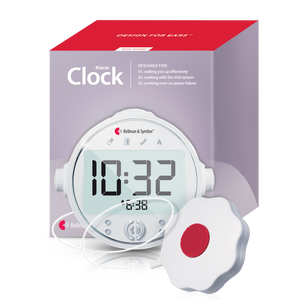
Bedside clock with three simultaneous alert channels - vibration, flashing lights, and 100dB sound - plus battery backup. The most comprehensive single-unit alarm Bellman makes.

Wireless Bluetooth bed shaker - completely silent, app-controlled, rechargeable, and compact enough to travel anywhere. No clock unit, no cables, no sound.
Why This Comparison Matters
The Alarm Clock Pro and the Vibio are Bellman's two most-asked-about products - and the most common point of confusion. On the surface, they seem to serve the same need: waking up someone who can't rely on a standard sound alarm. But they are built around fundamentally different assumptions about where you sleep, who you sleep near, and what failure modes you most need to protect against.
The Alarm Clock Pro is a bedside clock unit. It plugs into the wall, sits on your nightstand, and connects via a cable to a bed shaker that goes under your pillow or mattress. When the alarm fires, it activates three independent channels at once. It is the closest thing Bellman makes to a no-compromises, everything-covered home alarm.
The Vibio is not a clock at all. It is a small, quilted, rechargeable pad that pairs to your smartphone via Bluetooth and vibrates silently when your app-set alarm time arrives. No sound. No flashing lights. No wall connection. No bedside unit. Just a pad under the pillow that moves when it is supposed to.
The right choice between them depends almost entirely on your specific situation. This guide walks through every relevant dimension - alert channels, setup, portability, reliability, use cases - so the decision is clear by the end.
Choose the Alarm Clock Pro if you sleep at home and want the most reliable, multi-sensory alarm available - one that works through vibration, light, and sound simultaneously and keeps running even in a power outage. Choose the Vibio if you travel frequently, share a room where zero noise and zero light is non-negotiable, or want a completely app-managed, cable-free alarm that goes wherever you go. Many people end up with both - one for home, one for travel.
Full Spec Comparison
| Specification | Alarm Clock Pro | Vibio |
|---|---|---|
| Product type | Bedside clock unit with wired bed shaker | Wireless Bluetooth bed shaker pad |
| Primary alert method | Vibration + 4x LED flashes + 100dB sound (simultaneous) | Silent vibration only |
| Sound output | Up to 100dB, ascending, multi-frequency | None - completely silent by design |
| Flashing LED lights | Yes - 4 high-intensity LEDs, daytime-visible | None - LED status indicators only (not alarm lights) |
| Bed shaker type | Wired - connects via cable to clock unit | Wireless - self-contained, no cable needed |
| Shaker placement | Under pillow or mattress | Under pillow or mattress |
| Power source | Mains (wall plug) + rechargeable NiMH backup | Internal rechargeable lithium-ion battery only |
| Battery backup | Yes - pre-installed, powers all functions (shaker + lights + sound) | Always on battery - no mains dependency at all |
| Battery life | Pre-installed NiMH (backup only) - stays charged via mains | Up to 10 days per charge · 1.5-hour full charge |
| Alarm configuration | Physical dials and buttons on clock unit | Free app on iOS & Android - up to 10 alarms with day patterns |
| Alarm storage | On-device - no app or phone required | Stored locally on device - works with phone off or disconnected |
| Snooze | Smart Snooze - 9 min reducing to 2 min in 2-min steps | App-configurable snooze interval + physical snooze strap |
| Sound-off mode | Yes - toggle on back; vibration + lights remain active | Always silent - no sound to disable |
| Vibration intensity | Fixed (high output motor - no adjustment) | Adjustable: soft / medium / strong |
| Phone call + text alerts | No | Yes - vibration notification for incoming calls and texts |
| Connectivity | None - standalone device | Bluetooth 5 - requires app for setup and changes |
| Night light | Yes - built-in soft glow for dark navigation | No |
| Display | Large illuminated LCD with adjustable backlight | No display - LED status indicators only |
| Portability | Bedside unit - not designed for travel | Compact (3.7 × 3.7 × 1.1 in) - TSA-compatible, travel-ready |
| Setup | Plug in, connect shaker, set time - no pairing required | Initial Bluetooth pairing + app setup required |
| Works without smartphone | Yes - completely independent | Yes (after initial setup - alarms stored locally) |
| Warranty | 24 months | 24 months |
Round by Round: How They Compare on What Matters
Three channels activate simultaneously at alarm time: the wired bed shaker produces strong vibration through the mattress; four high-intensity LED lights flash at camera-flash intensity; and the 100dB ascending alarm sweeps through multiple frequencies. All three fire at once. No single channel is the alarm - the system is the alarm. If vibration alone doesn't break through deep sleep, the LEDs add a visual signal. If the user has some residual hearing, the 100dB multi-frequency audio adds a third route. This level of redundancy is why the Pro is the right tool when reliability is the non-negotiable requirement.
One channel: silent vibration. The Vibio's motor is powerful enough to wake heavy sleepers and is the preferred device for many deaf users - but it offers no LED backup and no auditory signal. If the vibration alone doesn't produce arousal on a given morning - due to sleep stage, mattress thickness, or shaker placement - there is no second channel to compensate. The Vibio's vibration-only design is its defining feature in the right context (shared rooms, travel), but it is also its constraint when maximum reliability is the priority.
The Pro is a bedside clock unit with a mains cable, a wired bed shaker, and a clock body designed to sit on a nightstand. It travels poorly - it is not compact, requires wall power, and the shaker cable adds complexity when packing. It is designed to stay in one place and work there every day. Using it in a hotel or dorm room is possible but inconvenient. It is not the Bellman product for people who need their alarm to travel with them.
The Vibio was designed with travel explicitly in mind. At 3.7 × 3.7 × 1.1 inches, it fits in any bag or coat pocket. Its lithium-ion battery holds up to 10 days of charge, meaning a week away requires no recharging at all. It is TSA-compatible, requires no wall plug (only USB to recharge when needed), and stores all alarm settings locally so hotel Wi-Fi, an unfamiliar outlet, and a forgotten charger are all non-issues. For frequent travelers with hearing loss or heavy sleeping habits, the Vibio is the alarm clock they take everywhere, while the Pro stays home.
The Pro can be used in a shared room with the sound toggled off - the button on the back disables audio while keeping vibration and LED lights active. For many shared-room situations, vibration under the mattress is contained enough not to disturb a partner. The LED lights, however, are high-intensity and designed to be visible with eyes closed - they will illuminate a dark room and may wake a light sleeper. The Pro is workable in shared rooms when sound is the primary concern, but the lights are a genuine tradeoff.
The Vibio produces no sound, no flashing lights, and no visual output at all. Under-pillow placement contains the vibration closely. At the "soft" intensity setting, the vibration is detectable by the user under their pillow but is unlikely to transmit meaningfully to the other side of a standard mattress. This makes the Vibio the definitive solution for couples with different wake times, roommates in shared spaces, and any situation where zero disturbance to others is not negotiable. No configuration required - it is silent by design.
The Pro runs on mains power with pre-installed rechargeable NiMH batteries that automatically kick in during a power outage, maintaining all functions - bed shaker, LED lights, and sound. There is no nightly charging ritual, no battery level to monitor, and no risk of waking to find the device dead. As long as it stays plugged in, the backup battery stays charged and ready. For users whose morning alarm has medical, professional, or safety implications - dialysis schedules, shift work, critical appointments - the Pro's always-on reliability is the right foundation.
The Vibio runs entirely on its internal battery - 10 days per charge is exceptional, and there is no mains dependency at all. But 10 days means the battery eventually runs down, and catching the Vibio at low charge the night before an important alarm is a failure mode the Pro cannot have. Red LED indicators warn of low battery, and monitoring via the app helps - but the discipline of regular charging is a genuine maintenance requirement. In travel contexts the 10-day life is freeing; as a primary home alarm for critical schedules, the Pro's always-charged mains approach is more dependable.
The Pro requires no app, no pairing, and no smartphone. Plug it in, connect the shaker cable to the port on the back, place the shaker pad, and set the alarm using the on-unit controls. The large illuminated LCD display confirms the time and alarm setting visually at a glance. For older adults, people who prefer not to manage apps, and anyone who wants an alarm that works the same way a clock has always worked - just more reliably - the Pro's physical interface is the right fit. Nothing about its operation depends on any external device or software.
The Vibio requires an initial Bluetooth pairing step and app download before it is functional. For most users this takes a few minutes and is straightforward. Once set up, alarm times are stored on the device and the phone is not needed for the alarm to fire - but any changes to alarm times require reopening the app. Users who prefer visual confirmation of the current time (the Vibio has no display) and those who are less comfortable with app management may find the Pro's physical interface easier to operate correctly, especially when setting the alarm at the end of a long day.
For deaf and hard-of-hearing users at home, the Pro's three simultaneous channels give the highest possible probability of successful arousal on any given morning. The LED lights add a visual backup that is independent of both hearing and vibration - useful for the mornings when the vibration alone doesn't produce immediate waking. With sound disabled, the Pro operates on vibration and lights only, covering users who are profoundly deaf and don't benefit from the audio component. Battery backup ensures the alarm functions even during overnight power interruptions - a meaningful reliability guarantee for deaf adults who have no auditory fallback.
The Vibio is a strong option for deaf and hard-of-hearing users in specific situations - travel, shared rooms, and as a secondary device - but its single vibration-only channel makes it a less comprehensive primary home alarm for this group. It lacks the LED visual backup that gives the Pro its redundancy advantage. That said, many deaf users find the Vibio's vibration entirely sufficient as their primary alarm, particularly with "strong" intensity and proper under-mattress placement. For users comfortable relying on vibration alone, the Vibio works well. For those who want every available backup channel, the Pro is the more complete tool.
The Pro is a standalone bedside alarm clock with no smartphone integration and no notification functionality. It wakes you at your set alarm time and that is its entire scope. If you need vibration alerts for incoming calls or texts - during a nap, or as a day-use notification device - the Pro does not provide this. It is an alarm clock, not a notification system.
The Vibio extends beyond morning alarms into a broader notification role. Enable call and text notifications in the app settings, and the Vibio vibrates and flashes a colored LED icon whenever an incoming call or text arrives on your paired phone. This makes it genuinely useful as a daytime notification device for deaf and hard-of-hearing users who want tactile awareness of communications without looking at a phone screen constantly. Place it on the desk, under a cushion, or in a pocket - it becomes a silent, always-on communication alert that the Pro cannot replicate.
The Scenario Guide: Which One Is Right for Your Situation
Specs and round comparisons tell you what each product does. Scenarios tell you which one to buy. Find your situation below.
Three channels, battery backup, Smart Snooze, and no daily charging discipline required. The Pro is built for exactly this - a morning alarm that works every morning, without exception.
Compact, 10-day battery, no wall plug needed, alarms stored locally. The Vibio fits in a carry-on and works identically in a hotel as it does at home. Most travelers who buy it never leave home without it.
Zero sound, zero light, compact pad under your pillow. At soft vibration intensity, the Vibio contains its signal closely enough that most partners won't notice. The Pro's LED lights would illuminate the room.
Vibration plus four flashing LEDs plus battery backup - three independent channels for maximum arousal probability. Disable sound for vibration-and-light-only operation. The Pro is the deaf community's most-recommended bedside alarm for a reason.
Silent, no clock unit on the desk, app-managed, and compact. Vibio's silent alerts are roommate-proof. If you sleep through vibration alone, consider the Pro for home use and the Vibio for dorm.
The combination of mattress vibration, bright LED flashes, and a 100dB alarm with Smart Snooze is purpose-built for this exact problem. Multi-channel simultaneous alerts are harder to sleep through than single-channel vibration.
Enable call and text notifications in the Vibio app and it becomes an always-on communication alert device. The Pro is an alarm clock only - it has no notification functionality outside the set alarm time.
Mains power with automatic battery backup means the Pro never runs out of charge. For alarm reliability with genuine health consequences, the always-on Pro is the lower-risk choice over a device that requires periodic charging.
Pre-installed rechargeable NiMH batteries power all functions - shaker, lights, sound - during outages. The Vibio runs on its own battery entirely, so it also works in a power outage, but the Pro was specifically designed with this scenario in mind.
No pairing, no app, no smartphone dependency. Physical controls on the clock unit. Set the time, set the alarm, and it runs independently. The Pro works identically whether or not you own a smartphone.
The Vibio offers three intensity settings in the app: soft, medium, and strong. The Pro's motor output is fixed at full strength - designed to wake reliably in the hardest cases, but not adjustable for lighter preferences or shared-bed sensitivity.
If you can only have one device for both contexts, Vibio's portability makes it the right choice. Just be aware that it lacks the LED lights and multi-channel redundancy of the Pro. For most situations, the ideal setup is Pro at home and Vibio in the bag.
The Alarm Clock Pro and the Vibio aren't competing for the same user. The Pro is for people who want the most reliable alarm available at home. The Vibio is for people who need their alarm to travel with them - or who need it to be completely invisible and silent in a shared space.
Bellman & Symfon - Product Design RationaleCommon Questions
Can I Use Both the Pro and the Vibio Together?
Yes - and many Bellman customers do exactly this. The Alarm Clock Pro is the primary home bedside alarm; the Vibio goes in the travel bag for hotel stays and overnight trips. They operate completely independently - no pairing, no system integration required. If you travel more than a few times a year and have hearing loss or heavy sleeping habits, the combination is genuinely practical and addresses use cases neither product covers alone.
Is the Vibio Reliable Enough to Be a Primary Home Alarm?
For most users, yes - especially with under-mattress placement at the strong intensity setting. The Vibio wakes heavy sleepers and deaf users reliably in the right setup. The caveat is battery management: at up to 10 days per charge, most people charge it once every 1–2 weeks. If battery discipline is something you'll maintain, the Vibio works well as a sole home alarm. If you want zero risk of a dead battery on a critical morning, the Pro's mains-powered design removes that variable entirely.
Does the Vibio Work If My Phone Dies Overnight?
Yes. Once alarm times are set and synced via the app, the Vibio stores them locally on the device. The alarm fires at the set time regardless of whether the phone is charged, connected, or even turned on. The only dependency on the phone is for initial setup and for changing alarm times - day-to-day operation is fully independent. This is one of the Vibio's key reliability features relative to ordinary phone alarms.
What About the Alarm Clock Classic - How Does It Fit In?
The Alarm Clock Classic is a third option that sits between the two: it has the Pro's wired bed shaker, 100dB ascending alarm, Smart Snooze, and battery backup, but does not include the LED flashing lights. It is the right choice for users who want the Pro's core alarm reliability with a simpler, more streamlined interface and don't need the visual alert channel. For a full comparison of all four Bellman models, see Best Vibrating Alarm Clocks for Heavy Sleepers & Hearing Impaired (2026).
Which Is Better for Deaf Users Who Live Alone?
For deaf adults living alone who need overnight coverage beyond the morning alarm - smoke, CO, doorbell - neither the Pro nor the Vibio is the full answer. The Alarm Clock Receiver, as part of the Bellman Alerting System, provides morning alarm functionality plus whole-home overnight safety alerts with color-coded LED indicators. See Best Alarm Clock for the Deaf: Tested and Ranked for a full breakdown of that use case.
Choose based on what your situation actually needs
Each line below points to the right product. Read down and stop at your situation.
- Primary home alarm, max reliability, deaf or hard of hearing → Alarm Clock Pro
- Travel or hotel stays - need alarm away from home → Vibio
- Shared room, partner must not be disturbed - zero sound, zero light → Vibio
- Heavy sleeper, want vibration + lights + sound at once → Alarm Clock Pro
- Want adjustable vibration intensity (soft/medium / strong) → Vibio
- Need call and text vibration alerts through the day → Vibio
- No app, no Bluetooth, no smartphone - just a clock → Alarm Clock Pro
- Power outage protection for all alert channels → Alarm Clock Pro
- Medically important schedule, cannot miss the alarm → Alarm Clock Pro
- One device for both home and travel → Vibio (or both)
- Want both for home and travel → Alarm Clock Pro + Vibio
- Deaf, living alone, need overnight home safety → Alarm Clock Receiver
The Bottom Line
The Alarm Clock Pro wins on alert redundancy, reliability, and completeness for home use. Three simultaneous channels, pre-installed battery backup, Smart Snooze, and no dependency on phones or apps make it the right anchor for anyone who treats their morning alarm as a non-negotiable - especially deaf and hard-of-hearing users who need every available channel working simultaneously.
The Vibio wins on portability, silence, and flexibility. It goes everywhere, disturbs no one, stores alarms locally, and adds phone notification capability that the Pro simply doesn't have. For travelers, people in shared rooms, and users who want app-based alarm management, it solves problems the Pro cannot.
The fact that these two products are so commonly purchased together - the Pro for home, the Vibio for travel - is the clearest signal that they are not competing. They cover different contexts. If your situation is clearly one or the other, the choice is straightforward. If you split time between them, they are designed to coexist without any configuration between the two.
Alarm Clock Pro
Three simultaneous alert channels, pre-installed battery backup, and Smart Snooze - the most complete home alarm Bellman makes.
View Alarm Clock Pro →Vibio
Silent, Bluetooth, portable, and completely self-contained - the alarm that travels with you and never disturbs anyone else.
View Vibio →Sources and references: Bellman & Symfon - Alarm Clock Pro product specifications (us.bellman.com/products/heavy-sleeper-vibrating-alarm-clock-pro); Vibio product specifications (us.bellman.com/products/vibio); Alarm Clock Classic specifications (us.bellman.com/collections/alarm-clocks); Alarm Clock Receiver specifications (us.bellman.com/products/alerting-signaling-device-alarm-clock-receiver) · Bellman & Symfon product collection page - us.bellman.com/collections/alarm-clocks · Vibio Amazon listing - dimensional specifications (94 × 94 × 28 mm / 3.7 × 3.7 × 1.1 in), battery life, Bluetooth 5 connectivity · Bellman Alarm Clock Pro - FAQ and user reviews: us.bellman.com/products/heavy-sleeper-vibrating-alarm-clock-pro · National Institute on Deafness and Other Communication Disorders (NIDCD) - Quick Statistics About Hearing (2026).
This article is for informational purposes only. Product specifications are based on current published listings at us.bellman.com and may be updated; verify current specs on the product page before purchase.
Alarm Clock Pro vs. Vibio: Which Bellman Alarm Is Right for You?
This guide breaks down the practical choices, features, and considerations behind this topic. Use it to identify a setup that fits the listener, the environment, and the everyday moments that matter most.
The featured products below are current Bellman options discussed in the article or closely matched to its use case.