Emergency Alerts on the Go: Staying Safe in Unfamiliar Places

Away from home, you do not know the local sirens or alarms. Many warnings rely on sound. This guide shows how alerts reach your phone. It also covers extra sources and hotel questions.
- What Are Emergency Alerts?
- How Do Wireless Emergency Alerts Work?
- How Do You Check Your Phone Before You Travel?
- Which Other Alert Sources Should You Add?
- How Do You Reach 911 if You Cannot Hear?
- What Should You Ask Your Hotel About Emergencies?
- How Do You Stay Alert at Night?
- How Do You Stay Aware in Remote Places or on Ships?
- What Should You Do When an Alert Arrives?
- What Is a Simple Emergency Alert Checklist?
- People Also Ask
In the United States, Wireless Emergency Alerts reach phones in an affected area. They show text with a unique sound and vibration. Keep emergency alerts and vibration on. Add local alerts and ask your hotel about visual alarms. No single device covers every situation.
What Are Emergency Alerts?
Emergency alerts warn you about danger in your area. They come from several systems. Each works in a different way.
- Wireless Emergency Alerts (WEA) reach your phone.
- Local text and email systems need a sign-up.
- NOAA Weather Radio sends weather warnings.
- Hotel alarms warn guests inside the building.
- Embassy alerts help travelers abroad.
No one system is enough. Use several, and plan before you go.
How Do Wireless Emergency Alerts Work?
Ready.gov explains that WEA messages look like text messages. They are built to get your attention with a unique sound and vibration. Both repeat twice.
- They are free, and you need not subscribe.
- They go to compatible phones in a targeted area.
- They are not affected by network congestion.
- They do not disrupt texts, calls, or data sessions.
The FCC says the signal and vibration help people with hearing disabilities. They also help people with vision disabilities. Authorized officials send alerts through FEMA.
How Do You Check Your Phone Before You Travel?
- Open your phone settings and find the emergency alerts menu.
- Make sure government and emergency alerts are on.
- Keep vibration on, not only sound.
- Check how your phone handles alerts at night.
- Charge your phone every night, and carry a backup battery.
The FCC warns that turning off sound or vibration may hide alerts. Test your settings before each trip.
Some older phones may not support every alert feature. Check with your carrier if you are unsure.
Which Other Alert Sources Should You Add?
| Source | What It Gives You | How to Get It |
|---|---|---|
| Wireless Emergency Alerts | Text, sound, and vibration on your phone. | Already on most phones. |
| Local text and email alerts | Local emergency news and warnings. | Sign up with local emergency management. |
| NOAA Weather Radio | Weather warnings direct from the NWS. | Buy a receiver made for deaf users. |
| STEP | Email alerts from U.S. embassies abroad. | Enroll free at step.state.gov. |
| Hotel alarms and notices | Building alarms and staff contact. | Ask the hotel before you arrive. |
Ready.gov advises you to sign up for local text or email alerts. Ask the local emergency management office how.
Can a Weather Radio Work for Deaf Travelers?
Some can. The National Weather Service says some receivers have text displays and strobe lights. Some also have outputs for bed shakers. Most basic models use sound alone.
Weather radios are not Bellman products. Check that a model fits your needs before you buy.
How Do You Get Alerts When Traveling Abroad?
The State Department runs the Smart Traveler Enrollment Program (STEP). It is free. It sends email alerts from U.S. embassies. It also helps embassies reach you in an emergency. Local alert systems abroad may differ.
How Do You Reach 911 if You Cannot Hear?
The FCC says to call 911 if you can. Text-to-911 is only available in certain locations. Each local 911 center decides if it accepts texts.
- Check if your destination supports text-to-911.
- Ask your carrier about texting 911 on your plan.
- If texting is not available, use a TTY or relay service, if possible.
- Be ready to give your exact location.
This guide gives general information. It is not emergency advice.
What Should You Ask Your Hotel About Emergencies?
The Department of Justice says many hotels must offer rooms with visual alarms. These rooms also need visual alerts for phone calls and door knocks.
- Ask for a room with a visual alarm.
- Ask how staff will reach you in an emergency.
- Ask where the evacuation plan is posted.
- Find the two closest exits the day you arrive.
- Count the doors to each exit.
- Keep your room key near your bed.
The last four steps follow guidance from the U.S. Fire Administration.
Related reading: Hotel Safety for Deaf Guests: What to Ask & Bring
How Do You Stay Alert at Night?
Night is the hardest time. Sound alerts are easy to miss. Plan for vibration and light.
- Keep your phone charged and near your bed.
- Keep phone vibration turned on.
- Keep hearing devices in one spot you can reach.
- Use a bedside vibration alarm for wake-ups.

The Vibio Bed Shaker wakes you with strong, silent vibration. You can set up to 10 alarms. The free app works on iOS and Android. It can also vibrate for calls and texts.
Portable Bluetooth Bed Shaker Controlled by a Mobile App
Important: Bellman does not say the Vibio relays emergency alerts. It does not detect fire. It does not replace hotel alarms, official alerts, or emergency plans.

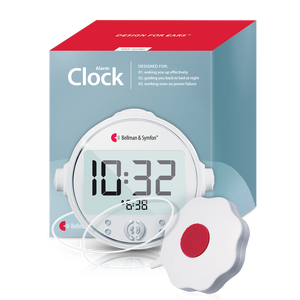
The Alarm Clock Pro is a bedside clock. It adds bright flashing lights to sound and vibration. It uses a wall plug power adapter.
Related reading: Best Portable Travel Alarm Clocks for Deaf & Heavy Sleepers
How Do You Stay Aware in Remote Places or on Ships?
Remote places and ships may have limited signal. Alerts may arrive late or not at all.
- Share your route and return time with someone you trust.
- Ask how ships and campsites share urgent news.
- Ask for written updates, if you need them.
- Carry a charged phone and a backup battery.
What Should You Do When an Alert Arrives?
- Read the full message on your screen.
- Follow the instructions in the alert.
- Tell your travel partner what the alert says.
- Ask hotel staff to confirm key details in writing.
- Check official sources for updates.
Do not rely on one alert alone. Stay aware of what is around you.
What Is a Simple Emergency Alert Checklist?
Your Emergency Alert Checklist
Use it before every trip.
- Confirm emergency alerts are on in your phone settings
- Keep phone sound and vibration on
- Charge your phone every night
- Carry a backup battery
- Sign up for local text or email alerts at your destination
- Enroll in STEP for trips outside the United States
- Check if the local 911 center accepts texts
- Ask the hotel about visual alarms and staff contact
- Find the exits and read the evacuation plan
- Keep your phone near your bed
- Pack a portable vibration alarm and a phone backup alarm
- Share your plans with someone you trust
Add a Silent Wake-Up Aid to Your Plan
The Vibio Bed Shaker is portable, rechargeable, and controlled by a free app.
People Also Ask
What Are Wireless Emergency Alerts?
They are free, text-like messages sent to phones in an affected area. They use a unique sound and vibration.
Do I Need to Sign Up for Emergency Alerts?
Not for Wireless Emergency Alerts. Local text and email alerts often need a sign-up.
Will My Phone Get Alerts in Another City?
Alerts go to compatible phones in the affected area. Check that emergency alerts are on in your settings.
Do Wireless Emergency Alerts Help Deaf Travelers?
The FCC says the signal and vibration help people with hearing disabilities. Each alert also shows text.
Can I Text 911 While Traveling?
Only in some areas. Call 911 if you can. Check your carrier and the local 911 center before you go.
How Can I Get Emergency Alerts Abroad?
U.S. citizens can join STEP. It sends free email alerts from U.S. embassies. Local alert systems abroad may differ.
Does a NOAA Weather Radio Work for Deaf Travelers?
Some models do. The NWS says some receivers have text displays and strobe lights. Some connect to bed shakers.
Will the Vibio Relay Emergency Alerts?
Bellman does not say it does. The Vibio vibrates for calls and texts. Keep your phone alerts on too.
What Should I Ask My Hotel About Emergencies?
Ask about visual alarms and how staff will reach you. Ask where the exits and evacuation plan are.
Do Alarm Devices Replace Official Alerts?
No. A wake-up aid does not replace hotel alarms, official alerts, or emergency plans.

Sources used in this article:
- Federal Communications Commission, Wireless Emergency Alerts, fcc.gov/consumers/guides/wireless-emergency-alerts
- Federal Communications Commission, WEA Accessibility, fcc.gov/wea-accessibility
- Federal Communications Commission, Text to 911, fcc.gov/consumers/guides/what-you-need-know-about-text-911
- Ready.gov, Emergency Alerts, ready.gov/alerts
- Ready.gov, Know Your Alerts and Warnings, ready.gov (PDF)
- National Weather Service, NOAA Weather Radio Special Needs, weather.gov/nwr/special_needs
- U.S. Department of State, Smart Traveler Enrollment Program, travel.state.gov
- Department of Justice, ADA Business Brief for hotels and motels, ada.gov/resources/business-brief-hotels
- U.S. Fire Administration, Hotel and Vacation Rental Fire Safety, usfa.fema.gov/prevention/hotel-fires
This article is for general information only. It is not emergency, medical, or legal advice. Alarm products do not replace official alerts, hotel alarms, or emergency plans. Alert systems vary by place, so confirm details before you travel.
Read Next in This Series
The Complete Travel Guide for Deaf & Hard of Hearing People (2026)
Our full guide to flights, hotels, devices, and safety.
Best Portable Travel Alarm Clocks for Deaf & Heavy Sleepers
Compare portable ways to wake up on time in any room.
Hotel Safety for Deaf Guests: What to Ask & Bring
Questions to ask the hotel and items to pack.
ADA Hotel Room Accommodations for Hearing Loss
What hotel rooms must offer and how to ask for it.
Flying With Hearing Loss: Airport & Airplane Tips
Simple steps for security, gates, and the flight itself.
Portable Bed Shakers for Travel: Never Oversleep on the Road
How a portable bed shaker works and how to pack one.
Travel Amplifiers & TV Listening for Hotel Rooms
Ways to hear conversations and TV in hotel rooms.
Cruise Travel for Deaf & Hard of Hearing Passengers
Plan for ship life, drills, shows, and shore trips.
Camping & Outdoor Safety for People With Hearing Loss
Plan and pack for trips without hotel alerts.
Travel Packing Checklist for Hearing Loss (Printable)
A printable list to help you pack with confidence.