Best Alarm Clocks for Teens Who Sleep Through Everything

If mornings in your house involve multiple trips upstairs, a phone alarm that's been silenced in their sleep, and a teenager who genuinely didn't hear any of it - you're not dealing with a discipline problem. Teenage sleep biology is working against the alarm clock, and the fix is more mechanical than motivational.
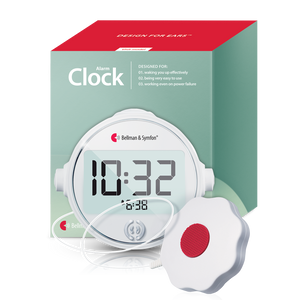
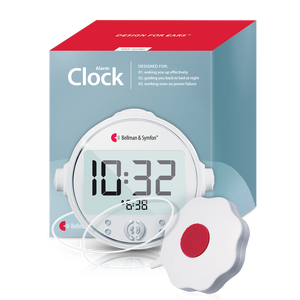
Teenagers are genuinely harder to wake than most adults, due to a combination of a naturally delayed circadian rhythm and a higher proportion of deep sleep - not a lack of effort. A multi-sensory alarm clock that combines sound, flashing light, and a bed shaker, like the Bellman Alarm Clock Pro, addresses this directly by removing any single point of failure. For teens who want a simpler, no-frills version of the same sound-and-vibration combination, the Alarm Clock Classic works just as well. A bed shaker placed under the mattress is consistently the single most effective addition for teenagers who sleep through everything else.
It's Not Laziness - It's Adolescent Sleep Biology
Few parenting frustrations are as universal as trying to wake a teenager who has, by every appearance, slept straight through an alarm that would rouse most of the neighborhood. It's easy to read this as attitude or a lack of motivation, but the underlying biology tells a different story, and understanding it changes how you approach the problem.
Two separate, well-documented changes happen during adolescence that combine to make teenagers genuinely harder to wake than children or adults. The first is a shift in circadian rhythm - the body's internal clock - that pushes natural sleep and wake times later, sometimes by two hours or more compared to pre-adolescence. The second is a higher proportion of slow-wave, deep sleep relative to adults, particularly earlier in the night. Neither of these is a choice, and neither responds well to being told to simply try harder.
Why Teenagers Are Especially Hard to Wake
A delayed circadian rhythm fights early school start times
During puberty, the body's release of melatonin - the hormone that promotes sleepiness - shifts to occur later in the evening than it did in childhood, and this shift is biological, not behavioral. A teenager who isn't sleepy at 10 pm often genuinely isn't, regardless of screen habits or willpower. When early school start times force a wake-up that fights this delayed rhythm, the result is similar to a mild, chronic version of jet lag - waking during what the body still considers the middle of the night.
More time in deep, slow-wave sleep
Layered on top of the circadian shift, adolescents spend a greater proportion of total sleep time in slow-wave sleep, when the brain is least responsive to external stimuli. This means that even when a teenager is getting a reasonable number of hours, a meaningful share of that sleep falls in the stage where an alarm is statistically least likely to register - especially in the early morning hours right before a typical school wake-up time.
Sleep debt compounds both effects
Because early school schedules routinely cut into a teenager's naturally delayed sleep window, many teens accumulate meaningful sleep debt across the school week. The body responds to sleep debt by prioritizing slow-wave sleep during whatever sleep is available, which further raises arousal threshold - creating a cycle where the harder a teen is to wake, the more sleep-deprived they typically are, and the more sleep-deprived they are, the harder they become to wake.
A teenager who can't hear their alarm isn't choosing to ignore it. Their biology has shifted their sleep timing later and increased their proportion of deep sleep - the alarm clock has to work with that reality, not against it.
Bellman & Symfon - Sleep & Alerting Research NotesWhy a Standard Phone Alarm Usually Isn't Enough
Most teenagers already use a phone alarm, and most parents have already discovered its limits. A few specific reasons explain why.
| Limitation | Why It Matters for Teens | What Actually Helps |
|---|---|---|
| Single sensory channel | Relies entirely on sound, which is precisely the channel a high arousal threshold and deep sleep make least reliable. | Add a bed shaker so vibration, not just sound, is doing the work. |
| Easy to silence unconsciously | Many teens report swiping off an alarm in their sleep with no memory of doing so - a documented behavior during lighter arousal states that don't reach full wakefulness. | Move the alarm off the phone entirely, onto a device that can't be silenced with a half-asleep swipe. |
| Placed within reach on the nightstand | Proximity makes a phone alarm easy to silence without fully waking, unlike a bed shaker that continues even after a nearby device is dismissed. | Use a bed shaker under the mattress, which can't be swiped away in the same motion as a phone. |
| No backup if sound fails | A single tone offers no redundancy if it doesn't register during a deep sleep stage. | A multi-sensory device firing sound, light, and vibration together removes this single point of failure. |
What Actually Works for Teens
A Bed Shaker Under the Mattress
Reaches the body through touch rather than hearing, and can't be silenced with the same half-asleep swipe that dismisses a phone alarm. Consistently the single most effective addition for teenagers who sleep through everything else.
A 100dB, Multi-Frequency Alarm
Loud enough and varied enough in pitch to cross a genuinely high arousal threshold, particularly when combined with vibration rather than relying on sound alone.
Flashing Light as a Third Channel
Useful as an additional stimulus, especially for teens in rooms with blackout curtains where visual cues might otherwise go unnoticed until later in the morning.
A Dedicated Device, Not the Phone
Removing the alarm from the phone also removes the single easiest way to silence it half-asleep and drift back into deep sleep undetected.
Taken together, these point toward the same conclusion covered in our pillar guide: a dedicated, multi-sensory alarm clock outperforms a phone alarm specifically because it can't be dismissed the same way and doesn't rely on a single sensory channel. For the broader science behind why sound-only alarms lose effectiveness over time for anyone - teen or adult - see why some people sleep through any alarm (and how to fix it).
Matching the Alarm Clock to Your Teen's Situation
The Alarm Clock Pro combines sound, light, and a bed shaker in one device - the most complete option for a teen who's proven consistently hard to wake.
The Alarm Clock Classic delivers the same 100dB alarm and bed shaker with a simpler two-dial interface - no extra settings for a teen to configure or ignore.
The Vibio wireless bed shaker delivers a silent, app-controlled vibration alarm - useful for teens who share a room with a sibling or simply prefer a private wake-up.
- Assuming it's a discipline or attitude problem rather than sleep biology
- Relying solely on the same phone alarm that's already proven unreliable
- Placing the alarm within easy reach, making it simple to silence half-asleep
- Not accounting for accumulated sleep debt from early school start times
- Skipping a bed shaker because "the alarm is already loud enough"
- Repeatedly waking a teen manually instead of addressing the alarm itself
- Ignoring how much a delayed circadian rhythm affects natural sleep timing
- Never testing the alarm during an actual deep sleep period before relying on it for school
Confirm these first
A few quick checks make the difference between another disappointing morning and one that actually works.
- Does the alarm include a bed shaker, not just a louder speaker?
- Is it a dedicated device, separate from your teen's phone?
- Does it offer at least 90–100dB if sound is one of the channels?
- Can the bed shaker be placed where it can't be easily silenced?
- Does your teen share a room, and would a silent option work better?
- Have you accounted for their school's actual start time and sleep debt?
- Is the interface simple enough that your teen will actually use it consistently?
- Have you tested the full alarm during a real, deep sleep morning?
Frequently Asked Questions
Why is my teenager so much harder to wake up than I was at their age, or than my other kids?
Adolescence brings a genuine, biological shift in circadian rhythm toward later sleep and wake timing, combined with a higher proportion of deep sleep - not a character difference between individual teens or generations.
Will a louder alarm clock alone fix this?
Often not on its own. Volume helps, but a bed shaker addresses the specific problem of a phone alarm being silenced half-asleep, and reaches the body through a different pathway than sound, which is why it tends to outperform volume alone.
Should teens use their phone as their alarm clock?
It's convenient, but it's also the easiest alarm to unconsciously silence with a half-asleep swipe. A dedicated bed shaker alarm clock, positioned so it can't be dismissed the same way, tends to be more reliable.
Is it normal for teenagers to need more sleep than adults?
Yes - the CDC and American Academy of Pediatrics generally recommend 8 to 10 hours of sleep per night for teenagers, more than what's typically recommended for adults.
Does this get better as teenagers get older?
Circadian rhythm timing and the proportion of deep sleep both gradually shift back toward adult patterns through the late teens and early twenties, though a dedicated alarm setup remains a practical solution in the meantime.
Give your teen an alarm that actually works
From the fully-loaded Alarm Clock Pro to the simple, reliable Alarm Clock Classic, find the setup that finally gets them up.
Sources and references: Centers for Disease Control and Prevention (CDC) - Sleep and Sleep Disorders; Adolescent Sleep Recommendations · American Academy of Pediatrics (AAP) - School Start Times and Adolescent Sleep · Sleep Foundation - Teen Sleep and Circadian Rhythm; Sleep Arousal Thresholds · National Institute on Deafness and Other Communication Disorders (NIDCD) - Hearing Loss Statistics · Bellman & Symfon - Product specifications and testing: Alarm Clock Pro, Alarm Clock Classic, Vibio.
This article is for informational purposes only and does not constitute medical advice. Consult a healthcare provider or sleep specialist for concerns about persistent excessive sleepiness or a possible sleep disorder.

Best Alarm Clocks for Teens Who Sleep Through Everything
This guide breaks down the practical choices, features, and considerations behind this topic. Use it to identify a setup that fits the listener, the environment, and the everyday moments that matter most.
The featured products below are current Bellman options discussed in the article or closely matched to its use case.