Alarm Clocks for Deep Sleepers vs. Light Sleepers: What's Different

"I'm a heavy sleeper" can mean two very different things - someone whose brain barely registers a full-volume alarm, or someone who wakes at the slightest sound but still can't shake off grogginess. The right alarm clock isn't the same for both. Here's how to tell which one you actually are, and what to buy accordingly.
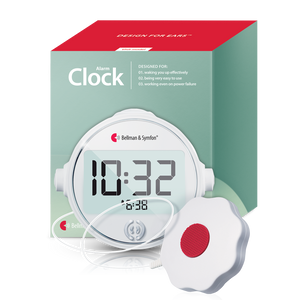
Deep sleepers have a naturally higher arousal threshold and need a multi-sensory alarm - sound, light, and a bed shaker firing together, like the Bellman Alarm Clock Pro - to reliably cross that threshold. Light sleepers wake easily to sound but can still struggle with grogginess or fragmented sleep, and often do better with a gentler, ascending alarm rather than an abrupt tone, sometimes paired with a lower-intensity bed shaker like Vibio for a smoother wake-up. Telling the two apart matters, because the wrong alarm can either fail to wake a deep sleeper or unnecessarily jolt a light one.
Two Different Problems That Look the Same From Outside
"I can't wake up in the morning" gets used to describe two genuinely different experiences, and mixing them up leads to buying the wrong alarm clock. A true deep sleeper can sleep through a smoke alarm, a doorbell, or someone shouting from another room - the stimulus simply doesn't register at all during certain sleep stages. A light sleeper, by contrast, often wakes to the smallest sound - a phone buzzing, a floorboard creaking - but may still feel groggy, unrested, or slow to get moving once awake, because their sleep is fragmented rather than because their arousal threshold is high.
Both groups frequently describe themselves as "heavy sleepers" in casual conversation, but the mechanism behind each is different, and so is the fix. Understanding which category you actually fall into is the fastest way to stop buying alarm clocks that don't solve your specific problem.
What Actually Separates a Deep Sleeper From a Light Sleeper
Time spent in slow-wave sleep
Sleep moves through repeated cycles of lighter stages and deeper, slow-wave sleep across the night. Deep sleepers spend a larger proportion of total sleep time in slow-wave sleep, when the brain is least responsive to outside stimuli of any kind. Light sleepers spend comparatively more time in lighter stages, where arousal thresholds are lower and external stimuli are more likely to trigger waking, sometimes even when it isn't wanted.
Age and life stage
The proportion of deep sleep a person gets tends to be highest in childhood and adolescence and gradually decline across adulthood, which is part of why teenagers are disproportionately represented among "impossible to wake" cases, while older adults more often report fragmented, easily disrupted sleep instead.
Sleep debt
Even a naturally light sleeper can temporarily behave like a deep sleeper after a period of accumulated sleep debt, since the body prioritizes slow-wave sleep to recover lost rest. This is why someone who normally wakes easily might sleep through an alarm after a demanding week - a temporary shift rather than a permanent trait.
A deep sleeper's alarm problem is that the stimulus never reaches a high enough arousal threshold. A light sleeper's alarm problem is usually the opposite - they wake constantly, but rarely into restorative, high-quality sleep in the first place.
Bellman & Symfon - Sleep & Alerting Research NotesDeep Sleeper vs. Light Sleeper: Side-by-Side Signs
| Sign | Deep Sleeper | Light Sleeper |
|---|---|---|
| Wakes to a phone buzzing nearby | Rarely, even at full volume | Almost always |
| Wakes to a partner getting up or moving | Rarely notices | Wakes easily, sometimes unintentionally |
| Has slept through a smoke alarm or doorbell | Yes, on at least one occasion | Very unlikely |
| Feels groggy or unrested despite adequate hours | Sometimes, especially with high sleep debt | Frequently - sleep is often fragmented |
| Needs an alarm within arm's reach to work at all | Often, even then it's unreliable | Not usually necessary |
| Best-suited alarm style | Multi-sensory: sound + light + bed shaker, fired together | Gentler, ascending tone, often with a lighter bed shaker as backup |
If most of your answers land in the "deep sleeper" column, the priority is redundancy - enough sensory channels that no single one has to carry the whole job. If they land in the "light sleeper" column, the priority shifts toward a smoother, less jarring wake-up that doesn't compound an already fragmented night. For the underlying science of why alarms fail heavy sleepers specifically, see our companion guide, why some people sleep through any alarm (and how to fix it).
Why the Same Alarm Clock Doesn't Work for Both
It's tempting to assume the loudest, strongest alarm on the market is simply the best choice for anyone who struggles to wake up. In practice, that's only true for genuine deep sleepers.
Over-Alerting a Light Sleeper
A 100dB alarm firing at full intensity from the first second can startle a light sleeper awake abruptly, triggering a stress response that makes the first few minutes of the day feel jarring rather than restful - even though the alarm technically "worked."
Under-Alerting a Deep Sleeper
A gentle, gradually rising alarm designed for a light sleeper's comfort may never reach the intensity needed to cross a true deep sleeper's arousal threshold, leaving them asleep well past the intended wake time.
This is why an ascending alarm - one that starts softer and increases in volume and intensity over roughly 30 to 60 seconds - tends to serve both groups better than a flat, instantly-loud tone. A light sleeper wakes during the gentler opening seconds; a deep sleeper is carried through to the full-intensity peak, sound, light, and bed shaker together, without either group being poorly served by the same underlying alarm mechanism.
Matching the Alarm to Your Sleep Type
Prioritize full redundancy. The Alarm Clock Pro fires sound, light, and a bed shaker together, giving the strongest possible combined signal against a high arousal threshold.
Prioritize a gentler, ascending wake-up. A sound-forward setup with the bed shaker on a lower intensity setting avoids over-alerting while still providing backup if grogginess sets in.
Many people shift between the two depending on sleep debt and stress. The Alarm Clock Classic's adjustable alarm and bed shaker settings adapt to either state without needing two separate devices.
- Assuming "heavy sleeper" always means the same thing regardless of the underlying cause
- Buying the loudest possible alarm when grogginess, not arousal threshold, is the real issue
- Ignoring a bed shaker for a confirmed deep sleeper because sound "should be enough"
- Not accounting for sleep debt temporarily shifting a light sleeper toward deep-sleeper symptoms
- Choosing an abrupt, flat-tone alarm over an ascending one for a light sleeper
- Never testing the alarm's actual intensity setting before a genuinely important morning
- Overlooking that age-related changes in sleep architecture can shift someone's category over time
- Assuming a fragmented light sleeper's grogginess will resolve with a louder alarm alone
Check every statement that applies to you
More checks in one column points clearly toward that category.
- I've slept through a full-volume phone alarm before
- I rarely wake to a partner moving or getting up
- I've slept through a smoke alarm or doorbell at least once
- I often feel groggy or unrested despite sleeping enough hours
- I wake at the smallest sound, even unintentionally
- I need my alarm within arm's reach or it fails entirely
- My sleep has felt lighter or more fragmented recently
- I've noticed my sleep pattern shift with age or stress
- I've recently been catching up on missed sleep
- An abrupt, loud alarm feels jarring rather than just effective
Frequently Asked Questions
How can I tell if I'm a deep sleeper or a light sleeper?
Deep sleepers typically sleep through loud, sudden stimuli like a smoke alarm or doorbell, while light sleepers wake easily to small sounds but often report grogginess or fragmented rest despite adequate hours.
Do light sleepers need a bed shaker alarm too?
Often, yes - though at a lower intensity than a deep sleeper would use. A bed shaker on a lighter setting can help counter grogginess or a snoozed alarm without the jarring effect of a sudden loud tone.
Can someone be a deep sleeper on some nights and a light sleeper on others?
Yes. Sleep debt, stress, and age-related changes can all temporarily shift where someone falls on this spectrum, which is part of why an adjustable alarm like the Alarm Clock Classic can be more practical than a fixed-intensity one.
Why does an ascending alarm work better than a flat, instantly loud one?
An ascending alarm serves both sleep types from a single device: light sleepers wake during the gentler opening seconds, while deep sleepers are carried through to the full-intensity peak if the earlier stage doesn't wake them.
Does age affect which category someone falls into?
Generally, yes. The proportion of deep sleep tends to be highest earlier in life and decline with age, which is part of why sleep tends to become lighter and more easily disrupted over time for many adults.
Find the alarm clock built for your actual sleep type
From the fully-loaded Alarm Clock Pro to the adjustable Alarm Clock Classic, match the alarm to how you actually sleep.
Sources and references: Sleep Foundation - Sleep Stages and Slow-Wave Sleep; Sleep Arousal Thresholds · National Institute on Deafness and Other Communication Disorders (NIDCD) - Hearing Loss Statistics · Centers for Disease Control and Prevention (CDC) - Sleep and Sleep Disorders · American Academy of Otolaryngology–Head and Neck Surgery (AAO-HNS) - Hearing Loss guidance · Bellman & Symfon - Product specifications and testing: Alarm Clock Pro, Alarm Clock Classic, Vibio.
This article is for informational purposes only and does not constitute medical advice. Consult a healthcare provider or sleep specialist for concerns about persistent fragmented sleep or excessive daytime sleepiness.

Alarm Clocks for Deep Sleepers vs. Light Sleepers: What's Different
This guide breaks down the practical choices, features, and considerations behind this topic. Use it to identify a setup that fits the listener, the environment, and the everyday moments that matter most.
The featured products below are current Bellman options discussed in the article or closely matched to its use case.