Wired vs Wireless Deaf Doorbell: Which Is Better for Your Home

If you're hard of hearing or deaf, a standard doorbell chime just doesn't cut it. But when you start shopping for an alert system, you'll quickly face a choice: wired or wireless? This plain-English guide covers exactly how each type works, who each is right for, and which system most people should choose in 2026.
Wireless deaf doorbells require no rewiring and pair directly with a bridge transceiver for instant wrist vibration alerts, making them easier to install and more flexible than wired systems that require permanent electrical work. For most people - renters, homeowners who don't want to call an electrician, and anyone who moves between homes - wireless is the right choice.
- How wired and wireless doorbell alert systems work
- Full side-by-side comparison
- When a wired setup actually makes sense
- Why wireless wins for most households
- What a wireless deaf doorbell system actually looks like
- Alert types: wrist, strobe, smartphone - and which matters most
- Renters and apartments: the wireless advantage
- Night alerts and sleeping with hearing loss
- How to decide: a quick framework
- Frequently asked questions
How Wired and Wireless Doorbell Alert Systems Work
Before comparing the two, it helps to understand the architecture of each, because they solve the same problem in fundamentally different ways.
A wired alerting system connects physically to your existing doorbell circuit. When someone presses the button at the door, the electrical signal travels through the low-voltage wire to an amplified chime unit or to a receiver wired into the home's power circuit, which then triggers a strobe light, a loud amplified ring, or both. Some wired systems also connect to lamp flashers plugged into wall outlets in different rooms. The keyword is "wired" - the transmitter, the receiver, and sometimes the flash units are all physically connected to your home's electrical infrastructure. Installation typically requires basic electrical knowledge at minimum, and a licensed electrician for anything beyond swapping out a chime unit.
A wireless system has no physical connection between the doorbell transmitter and the alert receivers. Instead, a small door transmitter - placed near your existing indoor chime or beside your door - detects the doorbell sound acoustically through a built-in microphone, then broadcasts a wireless signal (Bluetooth or RF) to a central hub called a bridge. The bridge relays the alert simultaneously to a vibrating wrist receiver worn on your wrist and to the Bellman Connect smartphone app. Nothing is wired into your electrical system. No holes in walls. No electrical work. Just plug the bridge into an outlet, pair the receiver, and you're done - typically in under ten minutes.
That fundamental difference - permanent electrical integration vs. plug-and-play wireless - drives almost every practical difference between the two types, from setup cost and complexity to portability and expandability.
Full Side-by-Side Comparison
| Factor | Wired System | Wireless System |
|---|---|---|
| Installation | Requires electrical work; often needs a licensed electrician | Plug in and pair - no tools, no wiring, under 10 minutes |
| Works for renters | No - permanent changes to electrical system | Yes - nothing installed permanently, fully portable |
| Upfront cost | Higher - parts + electrician labor | Lower - no installation labor required |
| Reliability | High - no wireless signal to drop | High - Bluetooth / RF is stable in residential range |
| Portability | Fixed in place - left behind when you move | Fully portable - takes minutes to pack up and re-use |
| Wrist vibration alert | Usually not available in traditional wired systems | Built in - the Watch Receiver vibrates on your wrist |
| Smartphone notification | Rarely - requires additional smart hub | Yes - via Bellman Connect app alongside wrist alert |
| Works without internet | Yes - wired to power only | Yes - wrist alert works via Bluetooth, no Wi-Fi needed |
| Expandable to smoke / baby / push alerts | Complex - requires additional wiring per device | Yes - add transmitters to same bridge and watch receiver |
| Suitable for deaf / profoundly hard-of-hearing | Depends - strobe-only may not reach you in all rooms | Yes - wrist receiver goes with you everywhere |
| Set up complexity for non-technical users | High electrical knowledge or professional required | Very low - designed for non-technical users |
When a Wired Setup Actually Makes Sense
Wired doorbell alert solutions are not obsolete - they still have a role in specific circumstances. Here are the situations where a wired approach is genuinely reasonable to consider.
New Construction or Full Renovation
If you're building a new home or undertaking a complete renovation where walls are open and an electrician is already on site, running dedicated low-voltage alert wiring to multiple rooms costs very little incremental labor. In this narrow scenario, a hardwired strobe system in every room makes sense as a supplemental layer.
Very Large Properties with RF Range Concerns
In extremely large homes - over 5,000 sq ft - or properties with unusually thick concrete or steel walls, wireless signal strength can become a consideration. In these cases, a hardwired alert infrastructure can guarantee coverage. That said, a well-placed wireless bridge typically handles standard residential properties without issue.
Existing Wired System Already in Place
If a previous owner installed a wired alerting system and it still functions correctly, there's no reason to rip it out. Using what's already there is perfectly reasonable. The question is whether you supplement it with a wireless wrist receiver for whole-home coverage.
Permanent Homeowner Seeking Maximum Redundancy
A small number of users - typically those with profound hearing loss and high safety needs - want both wired strobes in every room and a wireless wrist receiver. This belt-and-suspenders approach is entirely valid: the wired layer provides room-based visual alerts and the wireless layer provides body-worn vibration alerts regardless of where you are.
Outside these scenarios, the practical advantages of wireless systems are significant enough that wired-only setups are difficult to justify for most buyers starting from scratch in 2026.
Why Wireless Wins for Most Households
The core reason wireless deaf doorbell systems dominate the market for hard-of-hearing and deaf users isn't just cost or convenience - it's the nature of the alert itself.
Traditional wired systems deliver their alert through one of two channels: a loud amplified chime (which doesn't help someone who is profoundly deaf) or a strobe light (which only works if you're in the same room and happen to be facing it). Neither method follows you around your home. A wrist receiver does.
The most effective hearing loss alert is one that reaches you wherever you are - not one that assumes you'll be in the right room at the right moment.
Hearing Loss Association of America (HLAA)Wireless systems built around a wrist receiver solve this problem by design. The Bellman Doorbell System with Bluetooth Bridge and Watch Receiver sends the alert directly to a watch worn on your wrist - in the kitchen, the garden, the bathroom, or the garage. The alert goes where you go. That's simply not achievable with a room-fixed strobe or an amplified chime.
Easy Setup for Non-Technical Users
Equally important is how easy wireless systems are to set up. One of the most consistent pieces of feedback from people living with hearing loss - particularly older adults - is that assistive technology needs to be simple. Not just functional, but genuinely non-technical to set up and maintain.
The Bellman Bluetooth Bridge is designed exactly for this. Plug it into any wall outlet, place the door transmitter near your existing chime, put on the Watch Receiver, and follow the simple pairing steps. There are no router configurations, no app logins required for the core function, and no screwdrivers involved. Most users are set up and testing in under ten minutes. For a full walkthrough, see our guide: How to install a doorbell alert system for the hearing impaired: no electrician needed.
Smartphone Alerts: A Useful Second Layer
Modern wireless systems also integrate naturally with smartphones. When your phone is nearby, the Bellman Connect app delivers a simultaneous push notification alongside the wrist vibration. This is a convenient backup - useful when you're in the garden or a detached workspace - but it's a secondary layer, not the primary one. The wrist receiver is always-on and always reliable; smartphone alerts depend on a charge, a signal, and a notification that isn't buried under other apps. Both together give you genuine redundancy.
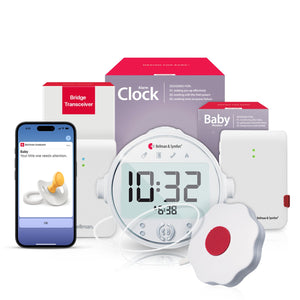
What a Wireless Deaf Doorbell System Actually Looks Like
It's worth being concrete about what's in the box and how the pieces fit together, because "wireless doorbell system" can mean very different things depending on the brand and technology.
Door Transmitter
A small device is placed near your existing indoor doorbell chime. It uses a built-in microphone to detect the sound of the chime when someone presses your door button. When it hears the pattern, it sends a Bluetooth signal to the bridge - typically within one second of the button press.
Bluetooth Bridge
The hub of the system is plugged into a central wall outlet. It receives signals from the door transmitter (and any other paired transmitters - smoke, baby, push button) and relays them to all paired receivers simultaneously. The Bellman Bluetooth Bridge is the engine that makes the whole system work.
Watch Receiver
Worn on your wrist. Vibrates and displays a doorbell icon the moment the door transmitter fires. Unique icons for each alert type (doorbell, smoke, baby) mean you always know what's happening without checking your phone. The Bellman Bluetooth Watch Receiver works day and night, indoors and out.
Smartphone App (Optional)
The Bellman Connect app receives a push notification at the same moment as the wrist alert - a helpful supplementary channel. The core system (transmitter → bridge → watch) works with no app required, which is an important design principle: your safety notification shouldn't depend on a phone being nearby and charged.
One of the most practical advantages of the Bellman wireless system is that the same bridge and watch receiver handle every alert type in your home. Add a smoke/fire transmitter, a baby monitor transmitter, or a push button transmitter, and the same watch on your wrist tells you exactly what each alert is, through distinct vibration patterns and icons. You're not buying a separate receiver for each device. You're building one integrated system.
Alert Types: Wrist, Strobe, Smartphone - and Which Matters Most
Not all alert channels are equally effective, and understanding the difference matters when you're deciding between a wired strobe-based setup and a wireless wrist-receiver system.
The wrist receiver is the only alert method that works consistently regardless of which room you're in, what you're doing, or whether your hearing aids are in. For people with moderate to profound hearing loss, it's the alert channel that every other method should supplement - not the other way around.
Strobe systems are genuinely useful, but they're a room-by-room solution. A strobe in the living room doesn't help you when you're in the kitchen. Installing strobes in every room adds complexity and cost, and it still doesn't cover outdoor areas or a detached garage. A wrist receiver covers all of those with one device.
Renters and Apartments: The Wireless Advantage
For anyone who rents - an apartment, a house, a condo - a wired doorbell alert system is essentially off the table. You cannot make permanent modifications to the electrical system of a rental property without landlord permission, and even with permission, you're installing something that stays behind when you leave.
A wireless system has none of these constraints. The door transmitter sits on a shelf or window ledge near your indoor chime unit - no adhesive, no screws. The bridge plugs into any outlet. The watch receiver goes on your wrist. When you move, you unplug the bridge, pocket the transmitter, and the whole system is ready to work identically in your next home.
- Nothing is permanently installed - no holes, no adhesive, no modification to the property
- Fully portable - pack it when you travel, take it when you move
- Works in apartments with intercom-style buzzers, traditional chimes, or electronic tones
- No landlord conversation needed - there's nothing to explain or justify
This is one of the reasons the Bellman wireless doorbell system has become the go-to for renters and apartment dwellers with hearing loss. For a full breakdown of apartment-specific considerations, see: Deaf doorbell systems for apartments: what works when you can't drill.
Night Alerts and Sleeping with Hearing Loss
One area where the wired vs. wireless distinction matters most is nighttime. When hearing aids are out and you're asleep, a strobe in another room is useless. An amplified chime won't wake you. Even a smartphone notification may not penetrate deep sleep.
The two reliable overnight alert methods are a wrist receiver worn during sleep or a bed shaker placed under the mattress. Both are wireless. Wired systems typically don't offer either option without adding wireless components anyway - at which point the "wired" label is somewhat misleading.
If you want comprehensive overnight coverage, Bellman offers sleep bundles that pair the Bluetooth Bridge and an alert transmitter with an Alarm Clock featuring a built-in bed shaker. These bundles are purpose-built for the nighttime gap:
- Bridge + Smoke/Fire Monitor + Alarm Clock - overnight fire and CO alerting with bed shaker
- Bridge + Door Transmitter + Alarm Clock - overnight doorbell alerting with bed shaker
- Bridge + Baby Monitor + Alarm Clock - overnight baby alerts with bed shaker
- Bridge + Push Button + Alarm Clock - bedside call button with overnight bed shaker
For daytime use, the Watch Receiver can be added separately - wear it during the day for on-wrist vibration alerts and rely on the bed shaker at night when the watch comes off.
- Strobe lights - only effective with eyes open in the same room
- Amplified chimes - insufficient for profound hearing loss, removed hearing aids
- Smartphone notifications - easily missed during deep sleep
- Wrist receiver (worn during sleep) - tactile alert works independently of hearing
- Bed shaker - vibrates the mattress, effective through deep sleep
- Bellman Alarm Clock with bed shaker - wakes you reliably, no sound required
How to Decide: A Quick Framework
The wired vs. wireless decision is straightforward once you know your situation. Here's a fast reference.
Answer these five questions
Each "yes" below points strongly toward wireless.
- Do you rent, or do you prefer not to modify your home's electrical system?
- Do you want to be alerted wherever you are in the home - kitchen, garden, bathroom - not just in one room?
- Do you want wrist vibration as your primary alert (rather than a room-fixed strobe)?
- Do you want to add smoke, baby, or push button alerts later without buying a new receiver?
- Do you want a system a non-technical person can set up and use without help?
If you answered yes to two or more of those questions, a wireless system is the right choice. The Bellman Doorbell System with Bluetooth Bridge and Watch Receiver is the starting point most people land on - it's the most versatile, the easiest to set up, and the most expandable.
If you have no existing doorbell button at all - for example, you're in an older home or a room where a button would be more useful than a chime transmitter - consider the Push Button System with Bluetooth Bridge and Watch Receiver instead. It uses the same bridge and watch receiver but with a portable push-button transmitter that anyone can press to send an instant wrist alert. Read more about how it works: Push button alert system for deaf people: the call-for-attention solution.
Frequently Asked Questions
Does a wireless deaf doorbell work with any existing doorbell?
In nearly all cases, yes. The Bellman door transmitter uses an acoustic microphone to detect the sound of your existing chime - wired or wireless, traditional ding-dong, or an electronic digital tone. You don't replace anything. The transmitter just listens for the chime sound and sends a wireless signal when it hears it.
What if I don't have an existing doorbell at all?
Use the Push Button System. Place or mount the push button transmitter by your door and it acts as your doorbell - pressing it sends an instant wrist vibration to the Watch Receiver without any chime unit required.
Is wireless reliable enough compared to wired?
Yes, for residential use. The Bellman system uses Bluetooth, which delivers consistent, low-latency signals across standard home distances (up to approximately 30 metres in open space, 20–25 metres through typical walls). Wireless signal drops are extremely rare in normal home conditions. The core wrist alert also doesn't depend on internet connectivity - it works through Bluetooth alone, so a router outage doesn't affect it.
Can I use the same receiver for smoke and doorbell alerts?
Yes. The Bellman Bluetooth Bridge connects to multiple transmitters simultaneously. The Watch Receiver shows a distinct icon for each alert type, so you always know whether you're responding to the doorbell, a smoke alarm, a baby monitor, or a push button. One receiver, all your home alerts.
I'm not tech-savvy. Will I be able to set this up?
Yes - this is a core design principle of the Bellman system. No app is required to set up the core wrist alert. No router login. No technical knowledge assumed. The process is: plug in the bridge, place the transmitter, put on the watch, and follow the pairing steps in the booklet. Most users are up and running in under ten minutes with no assistance. For a full walkthrough, see: How to install a doorbell alert system for hearing impaired: no electrician needed.
What happens to alerts when my phone battery dies?
Nothing changes for the wrist alert. The Watch Receiver operates entirely independently of your smartphone - it communicates directly with the Bluetooth Bridge. Smartphone push notifications via the Bellman Connect app will stop when your phone is off, but the wrist vibration continues to work. This is why the wrist receiver is the primary channel, not the secondary one.
Can multiple people in the same household receive alerts?
Yes. The Bellman Bluetooth Bridge supports multiple paired receivers simultaneously. If two family members both want wrist alerts, pair two Watch Receivers to the same bridge. You can also combine a Watch Receiver for one person with smartphone notifications via the Bellman Connect app for another.
The right system is the one you'll actually use - and actually works.
Explore Bellman's wireless doorbell alert systems - designed for non-technical setup, reliable wrist-vibration alerts, and a home that feels safe again.
Sources and references: National Institute on Deafness and Other Communication Disorders (NIDCD) - Quick Statistics About Hearing (2026); Age-Related Hearing Loss · World Health Organization (WHO) - Deafness and Hearing Loss Fact Sheet (March 2026) · Hearing Loss Association of America (HLAA) - Assistive Listening Devices; Hearing Loss Facts and Statistics · Americans with Disabilities Act (ADA) - Accessible Design Standards for Alarms and Alerting Devices · Bellman & Symfon - Bluetooth Bridge, Watch Receiver, and Doorbell System product specifications (us.bellman.com).
This article is for informational purposes only and does not constitute professional safety or medical advice. For clinical guidance on hearing loss, consult a licensed audiologist or healthcare provider.

Wired vs Wireless Deaf Doorbell: Which Is Better for Your Home
This guide breaks down the practical choices, features, and considerations behind this topic. Use it to identify a setup that fits the listener, the environment, and the everyday moments that matter most.
The featured products below are current Bellman options discussed in the article or closely matched to its use case.