Why Some People Sleep Through Any Alarm (and How to Fix It)

It isn't laziness, and it isn't a broken alarm clock. There is a real, measurable reason some people sleep through sound that would wake anyone else in the house - and once you understand the mechanism, the fix is straightforward. Here is exactly what's happening, in plain English.
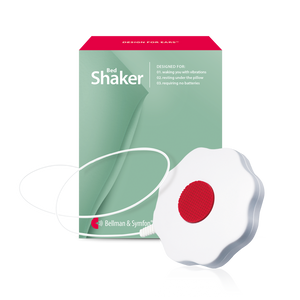
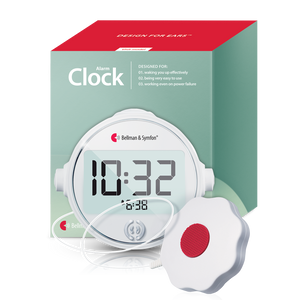
People sleep through alarms because of a combination of three factors: a naturally high arousal threshold during deep sleep stages, habituation to a familiar alarm sound, and - for the roughly 37.5 million US adults with some degree of hearing loss - a physical inability to hear the alarm at all regardless of sleep stage. The fix in every case is the same principle: add a sensory channel the brain hasn't learned to filter, most reliably a bed shaker alarm that wakes through touch instead of sound. Devices like the Bellman Alarm Clock Pro combine vibration, light, and sound so no single failure point can let an alarm go unnoticed.
Start Here: It's Not About Willpower - It's About Arousal Threshold
If you've ever been told to "just set a louder alarm" and it still didn't work, you already know the advice is incomplete. Sleeping through an alarm that would wake most people isn't a discipline problem. It's a measurable physiological phenomenon, and sleep researchers have a specific term for it: the arousal threshold - the intensity of stimulus required to bring a sleeping brain back to waking consciousness.
That threshold is not fixed. It rises and falls across the night as you move through different sleep stages, and it varies significantly from person to person based on age, sleep debt, hearing ability, and how familiar the alarm sound has become. A sound that would jolt a light sleeper awake during a lighter stage can pass completely unnoticed during someone else's slow-wave sleep - the deepest, most restorative stage of the night. Understanding this mechanism is the first step to actually solving it, rather than just buying an incrementally louder version of the same failing alarm.
The Three Reasons Alarms Fail to Wake You
Most people who "sleep through everything" are actually dealing with one, two, or all three of the same underlying causes. Separating them out matters, because each one calls for a slightly different fix.
Reason 1 - Deep Sleep Raises Your Arousal Threshold
Sleep moves in cycles through lighter stages and deep, slow-wave sleep, typically several times a night. Arousal thresholds are lowest in light sleep and highest during slow-wave sleep, when the brain is least responsive to external stimuli of any kind. People who spend a larger share of the night in slow-wave sleep - which includes many naturally deep sleepers, and anyone catching up on accumulated sleep debt - are statistically more likely to have an alarm fire during exactly the window when they're hardest to wake.
Reason 2 - Habituation: Your Brain Learns to Ignore a Familiar Sound
The brain is remarkably good at filtering out predictable, repetitive stimuli it has learned carry no new information - a phenomenon called habituation. The same alarm tone, played at the same volume, at the same time every morning, is exactly the kind of stimulus a sleeping brain becomes progressively better at tuning out over weeks and months. This is part of why an alarm that worked fine when you first bought it can quietly stop working just as effectively a year later, even though nothing about the device itself has changed.
Reason 3 - Sound Simply Doesn't Reach You
For the roughly 37.5 million US adults with some degree of hearing loss, the first two factors are almost beside the point. If hearing aids or a cochlear implant processor are removed overnight - which is standard practice for the large majority of wearers - an audio alarm has no pathway to the brain at all, regardless of how deep or light the sleep stage is. This is a fundamentally different problem from a high arousal threshold, and it needs a different kind of solution: one that doesn't rely on hearing in the first place.
A sleeping brain that has learned to filter out a familiar alarm sound cannot filter out a physical vibration it has no history with. Vibration reaches the body through a completely separate sensory pathway - which is exactly why it works when sound has stopped working, or never worked to begin with.
Bellman & Symfon - Sleep & Alerting Research NotesWhat Actually Determines How Heavy a Sleeper You Are
"Heavy sleeper" isn't a diagnosis - it's a description of an outcome with several possible causes layered on top of each other. Here are the four factors that most commonly combine to produce it.
Sleep Stage & Depth
The proportion of the night spent in slow-wave sleep varies naturally between individuals, and increases when someone is repaying accumulated sleep debt. More time in deep sleep means more windows where a standard alarm's timing works against you.
Age & Circadian Rhythm
Teenagers and younger adults typically spend a higher proportion of the night in deep sleep and run a naturally delayed circadian rhythm - part of why "my teenager sleeps through everything" is such a common complaint. Older adults trend toward lighter, more fragmented sleep, though hearing changes often offset the benefit.
Hearing Ability
Hearing loss removes sound as a reliable channel entirely, independent of sleep depth. This is a distinct mechanism from a high arousal threshold, though the two frequently overlap in the same person and call for the same practical fix.
Sleep Debt & Irregular Schedules
Shift workers and anyone waking during a circadian low point experience heavier sleep inertia regardless of how the prior night's sleep was structured - a different problem from arousal threshold, but one that responds to the same layered-alert approach.
Whichever combination applies to you, the practical takeaway is the same: the fix isn't a single louder alarm. It's adding a channel that doesn't depend on the pathway that's currently failing.
Why "Just Turn Up the Volume" Doesn't Actually Work
Turning up the volume is the intuitive first fix, and it does help - up to a point. But three separate mechanisms limit how far volume alone can take you, and understanding them explains why even a genuinely loud alarm clock sometimes still fails.
| Failure Mode | Why It Undermines Volume | What Actually Compensates |
|---|---|---|
| Distance Drop-Off | Sound intensity falls roughly 6dB every time distance doubles. An alarm rated at 90dB at arm's length can register closer to 78dB from across the room - well back into ignorable territory. | Keep any audio alarm within arm's reach, or add a vibration channel that doesn't lose strength with room distance the same way. |
| Frequency Mismatch | Age-related and noise-induced hearing loss typically affects high frequencies first. A single-tone alarm pitched in the wrong range can be functionally inaudible to someone with measurable hearing even at high volume. | Multi-frequency, ascending alarms - like the 100dB tone on the Alarm Clock Classic - sweep across frequencies rather than relying on one pitch. |
| Habituation Over Time | A brain exposed to the identical stimulus every morning becomes progressively better at filtering it out - the same reason an air conditioner's hum disappears from awareness after a few minutes. | Vibration is a stimulus the brain has far less practice filtering during sleep, which is why bed shakers tend to keep working over years where sound-only alarms degrade. |
- Placing the alarm clock across the room "for willpower" - then sleeping straight through it
- Assuming a phone alarm app is equivalent to a purpose-built alarm clock
- Relying on a single sensory channel after it's already proven unreliable
- Never testing the alarm at full sleep depth, only when already half-awake
- Ignoring hearing loss as a possible factor and assuming it's purely a sleep issue
- Increasing volume repeatedly instead of adding a different channel
- Using the same untouched alarm tone for years without variation
- Skipping battery backup, so a power outage removes the alarm entirely
The Fix: Layering Sensory Channels So No Single Failure Wins
Once you understand that arousal threshold, habituation, and hearing ability are three separate mechanisms, the fix becomes obvious: build in more than one way for the alarm to reach you, so that whichever mechanism is working against you on a given morning, another channel is standing by.
- Add vibration first. A bed shaker placed under the mattress or pillow delivers a physical signal through mechanoreceptors in the skin - a completely different nerve pathway than the auditory system, and one that neither habituation nor hearing loss affects the same way.
- Keep multi-frequency sound as a second channel. An ascending, multi-frequency alarm - rather than a single flat tone - improves the odds of being heard by anyone with partial, frequency-specific hearing loss, and is simply harder to ignore than a static beep.
- Add flashing light as a third channel. Bright, rapid flashing stimulates visual arousal even through closed eyelids in a dark room, and works well as a backup in shared spaces where audio has to be kept low.
- Fire all three simultaneously, not sequentially. The point of layering channels is redundancy at the same moment, not a chain of escalating alerts that gives the brain time to filter each one before the next arrives.
Sound travels through the ear canal, across the cochlea's hair cells, and up the auditory nerve - precisely the pathway that habituation dulls over time and that hearing loss can interrupt entirely. Vibration is detected by Pacinian corpuscles in the skin and travels up an entirely separate somatosensory pathway. A brain that has learned to filter a familiar alarm tone, or simply cannot hear it, has no equivalent history of filtering a physical shake under the mattress. That's why adding a bed shaker is consistently the single highest-leverage change anyone who "sleeps through everything" can make.
Matching the Fix to Your Specific Cause
While a layered, multi-sensory approach helps almost everyone, it's worth being specific about which combination best matches your situation.
A full multi-sensory device - sound, light, and bed shaker firing together, like the Bellman Alarm Clock Pro - gives you the most redundancy against a high arousal threshold, with sound and light still doing useful work alongside the vibration.
Vibration and light should be treated as the primary channels, with sound as a bonus rather than the main event. The same Alarm Clock Pro and Alarm Clock Classic both include a sound-disable option specifically for this reason.
If habituation is the main suspect - an alarm that used to work but has quietly stopped - the fix is less about adding hardware and more about breaking the pattern the brain has learned. Varying the alarm tone periodically, and making sure a bed shaker is part of the setup so the wake-up signal isn't purely auditory, both help interrupt habituation before it fully sets in.
If you also travel, share a room, or wake at a different time than a partner, the fix looks a little different again: a silent, app-controlled option like the Vibio wireless bed shaker delivers vibration-only alerts without any sound channel to disturb anyone else, while still solving the same underlying arousal-threshold problem.
Work through this before choosing a fix
Check every box that applies - most people check more than one.
- I've slept through a full-volume phone alarm before
- I've slept through a smoke alarm or doorbell
- I remove hearing aids or a cochlear implant processor at night
- My current alarm tone has been unchanged for over a year
- I place my alarm across the room "to force myself up"
- I share a room and can't use a loud audio alarm
- I wake at an hour that fights my body's natural rhythm
- I've never tested my alarm during genuinely deep sleep
- I don't currently use any vibration-based alert
- I've increased the volume of my alarm more than once without fixing the problem
What to Expect After You Fix It
Adding a bed shaker and a multi-frequency alarm solves the large majority of "I sleep through everything" cases, but a few honest caveats are worth knowing before your first night with a new setup.
Placement still matters even with the right hardware. A bed shaker placed under a very thick mattress topper, or a sound alarm left across the room instead of on the nightstand, will underperform its rated specifications regardless of how well the device itself is built. It's worth testing the full alarm - every channel - once during the day before relying on it for a genuinely important morning.
It's also worth expecting a short adjustment period. If your brain has spent months or years habituated to a specific alarm tone, a new sensory channel like vibration will likely wake you more reliably from the very first night - but a completely new sound tone can take a few nights to become a stimulus in its own right rather than background noise. This is normal and expected, not a sign the new device isn't working.
For a deeper look at how bed shaker technology works mechanically, and the evidence behind it, see our companion guide: Bed shaker alarms for heavy sleepers: do they really work? And if raw decibel output is still part of what you're comparing, our loudest alarm clocks 2026 rankings breaks down exactly how far volume alone can and can't take you.
Ready to stop sleeping through your alarm?
Explore the layered sound, light, and bed shaker alarm clocks built specifically for heavy sleepers and people with hearing loss.
Sources and references: National Institute on Deafness and Other Communication Disorders (NIDCD) - Hearing Loss Statistics; Age-Related Hearing Loss · Sleep Foundation - Sleep Arousal Thresholds and Alarm Efficacy; Sleep Stages and Slow-Wave Sleep · Centers for Disease Control and Prevention (CDC) - Sleep and Sleep Disorders · American Academy of Otolaryngology–Head and Neck Surgery (AAO-HNS) - Hearing Loss guidance · Bellman & Symfon - Product testing and specifications: Alarm Clock Pro, Alarm Clock Classic, Vibio, Bed Shaker.
This article is for informational purposes only and does not constitute medical advice. Consult a healthcare provider or sleep specialist for concerns about excessive daytime sleepiness or a possible sleep disorder.

Why Some People Sleep Through Any Alarm (and How to Fix It)
This guide breaks down the practical choices, features, and considerations behind this topic. Use it to identify a setup that fits the listener, the environment, and the everyday moments that matter most.
The featured products below are current Bellman options discussed in the article or closely matched to its use case.