The Complete Travel Guide for Deaf & Hard of Hearing People (2026)

Travel can feel stressful when you cannot hear announcements. Good planning solves most problems. This guide covers flights, hotels, waking on time, and staying safe. Every step is simple and easy to follow.
- How do you plan a trip with hearing loss?
- What should you pack for travel with hearing loss?
- How can you fly with hearing loss?
- What must hotels provide for deaf and hard of hearing guests?
- How do you wake up on time when you travel?
- Which devices help you hear conversations while traveling?
- How can you stay safe in unfamiliar places?
- What should you know before a cruise?
- What changes on camping and outdoor trips?
- How do you communicate at restaurants, tours, and taxis?
- What is a simple travel checklist for hearing loss?
- People also ask
The key to travel with hearing loss is planning ahead. Tell airlines and hotels what you need before you go. Ask for visual alerts and written information. Pack a silent alarm, your device supplies, and a way to write notes. Keep phone alerts on for emergencies.
How do you plan a trip with hearing loss?
Good planning removes most travel stress. Start early. Write down what you need at each step of the trip.
Use email or online chat instead of phone calls. Written replies give you a record. Save every confirmation.
Tell each business about your needs when you book. Do this for airlines, hotels, tours, and cruises. Ask what they can provide.
Questions to ask before you book
- Does the hotel have rooms with visual alarms and visual alerts?
- Can the airline send gate changes by text or in writing?
- Do tours offer captions, written scripts, or a hearing loop?
- Who handles accessibility requests, and how can I reach them by email?
Related reading: Travel packing checklist for hearing loss (printable)
What should you pack for travel with hearing loss?
Pack for three jobs. You need to wake on time. You need to communicate. You need to stay powered.
| Item | Why it helps |
|---|---|
| Portable alarm | Wakes you without relying on sound. |
| Device supplies | Spare batteries, chargers, and cleaning tools keep devices ready. |
| Charging cables and a power strip | Outlets near the bed may be limited. |
| Notepad and pen | Helps in noisy places and when devices fail. |
| Printed trip details | Keeps confirmations and contact emails at hand. |
| TSA notification card | Lets you share your needs quietly at security. |
| Travel case | Keeps devices and accessories in one place. |
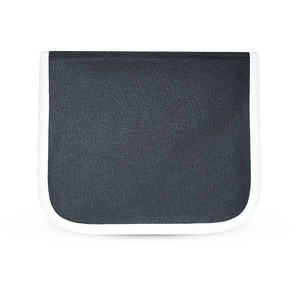
The Bellman Travel Case is made for Bellman amplifiers and listening devices. It is made of durable black canvas with a reinforced cover. Its inside compartments hold your device and accessories.
How can you fly with hearing loss?
Airports are loud. Announcements are hard to follow. A few steps make the day easier.
How does airport security work with hearing devices?
The TSA says you need not remove hearing aids or cochlear implants. Extra screening may happen if a device sets off an alarm.
Tell the officer you are deaf or hard of hearing. You can say it out loud. You can also show a TSA notification card. The TSA lists these options on its TSA Cares page.
How do you get gate and flight information?
HLAA advises you to say you have hearing loss at each step. Do this at the counter, the gate, and on the plane.
- Ask staff to tell you about gate changes directly.
- Ask to preboard if you cannot hear gate announcements.
- Ask flight staff to share safety information with you.
- If there is no captioned safety video, ask for written information.
Airlines must give you prompt access to the same flight information. Passengers must first tell airline staff about their hearing loss.
Related reading: Flying with hearing loss: airport & airplane tips
What must hotels provide for deaf and hard of hearing guests?
The Department of Justice explains what hotel guests can expect under the ADA. Many hotels must offer rooms with built-in communication features.
- Visual alarms tied to the building emergency alarm.
- Visual alerts for phone calls and door knocks.
- A text telephone (TTY) on request for room phone use.
- Caption decoders on request where rooms have TVs.
Hotels may also use portable visual alarms and communication devices. Rules can differ by building age and location. Ask the hotel what it offers.
How do you ask for an accessible room?
- Book directly with the hotel.
- Say you need a room with communication features.
- Ask the hotel to confirm your request in writing.
- At check-in, ask staff to show you how each device works.
- Ask how staff will reach you in an emergency.
Note: This guide gives general information. It is not legal advice. Check the hotel and the ADA.gov resources for details.
Related reading: ADA hotel room accommodations for hearing loss
Related reading: Hotel safety for deaf guests: what to ask & bring
How do you wake up on time when you travel?
Hotel wake-up calls use the phone. Phone rings are easy to miss. Time zones make it easy to oversleep. A vibration alarm gives you a second way to wake.
The Vibio Bed Shaker wakes you with vibration instead of sound. You control it with a free app for iOS or Android. You can set up to 10 alarms. You choose the vibration strength from soft to strong.
Vibio runs on saved settings if your phone is off. It can also vibrate for calls and texts. Follow the instructions in the box for placement.
Portable Bluetooth bed shaker controlled by a mobile app
Some people do not feel vibration deeply. Set a backup alarm on your phone too.
Important: A travel alarm is a wake-up aid. It does not replace hotel fire alarms or emergency procedures.
Related reading: Best portable travel alarm clocks for deaf & heavy sleepers
Related reading: Portable bed shakers for travel: never oversleep on the road
Which devices help you hear conversations while traveling?
Noisy stations, taxis, and tour groups make talking hard. Personal listening devices can help. They are not hearing aids. Pick one by the moment you need it.
| Travel moment | Bellman option | What to know |
|---|---|---|
| Waking on time | Vibio Bed Shaker | Silent vibration with app control and up to 10 alarms. |
| Talking one-on-one | Mino Personal Amplifier | Pocket-sized with dual microphones and a built-in telecoil. |
| Phone calls | Maxi Pro Personal Amplifier | Bluetooth amplifier for calls and conversations. |
| Tours and group talks | Domino Pro Listening System | A wireless transmitter picks up sound at a distance. |
| T-coil hearing aids | Neck Loop | Wearable loop for use with hearing aids in T-coil mode. |
| Keeping gear together | Travel Case | Canvas case with compartments for devices and accessories. |
Mino, Maxi Pro, and Domino Pro are personal listening products. They are not hearing aids. They are not intended to treat, correct, or diagnose any medical condition.
Which device suits one-on-one talks?
The Mino Personal Amplifier is a pocket-sized amplifier with dual microphones. It has omnidirectional and directional microphones. You can use the directional one in noisy places.
Pocket-sized personal amplifier with a built-in telecoil
The Mino is a personal sound amplification product. It is not a hearing aid. It is not intended to treat, correct, or diagnose any medical condition.
Which device helps with phone calls?
The Maxi Pro Personal Amplifier connects to your phone by Bluetooth. It is made for calls and conversations. It has a built-in omnidirectional microphone. The battery lasts up to 70 hours per charge.
The Maxi Pro is a personal sound amplification product. It is not a hearing aid. It is not intended to treat, correct, or diagnose any medical condition.
Which device helps on tours and in groups?
The Domino Pro Listening System has two parts. A wireless transmitter picks up sound at a distance. A receiver delivers it to you. It suits guided tours and group talks. Ask the guide before you use a transmitter.
It comes with a hard travel case. Headphones and earbuds are included.
The Domino Pro is a personal sound amplification product. It is not a hearing aid. It is not intended to treat, correct, or diagnose any medical condition.
What is a telecoil, and how do hearing loops help?
A telecoil is a tiny coil in many hearing aids and cochlear implants. It picks up signals from a hearing loop. Switch to the T setting when you enter a looped space. Ask your audiologist if your device has a telecoil.
The Mino has its own built-in telecoil. For T-coil hearing aids, try the Neck Loop. It is a wearable loop for T-coil mode. Bellman lists it for Maxi Pro, Mino, Maxi Classic, and Domino Pro.
Related reading: Travel amplifiers & TV listening for hotel rooms
How can you stay safe in unfamiliar places?
Unfamiliar places mean unfamiliar alerts. A few habits help you stay aware.
How do emergency alerts reach your phone?
In the United States, Wireless Emergency Alerts show as text on your phone. They also use a special sound and vibration. The FCC says this helps people with hearing or vision disabilities.
If you turn off vibration or sound, you may miss the alert. Check your phone settings before you travel.
What should you do at your hotel?
- Ask the front desk how staff will reach you in an emergency.
- Find the exits the day you arrive.
- Count the doors between your room and the stairs.
- Keep your phone charged and near your bed.
Important: No device can promise safety in every situation. Use alerts as one layer of planning.
Related reading: Emergency alerts on the go: staying safe in unfamiliar places
What should you know before a cruise?
Services vary by cruise line and by ship. Contact the accessibility team before you book. Ask clear questions and get answers in writing.
- How do safety drills reach deaf and hard of hearing passengers?
- Are shows and talks captioned?
- How will I get alerts in my cabin?
- Can I get written schedules and daily updates?
- What help is available on shore trips?
Related reading: Cruise travel for deaf & hard of hearing passengers
What changes on camping and outdoor trips?
Camping and outdoor trips have no front desk and no hotel alarms. Plan a little more.
- Share your route and return time with someone you trust.
- Agree on hand signals and a meeting point with your group.
- Carry a charged phone and a backup battery.
- Remember that signal can be limited in remote areas.
- Store hearing devices in a dry case at night.
Related reading: Camping & outdoor safety for people with hearing loss
How do you communicate at restaurants, tours, and taxis?
Small habits make daily talks easier on the road.
- Choose a quiet table and sit where you can see faces.
- Ask people to face you and speak at a steady pace.
- Keep a notes app or notepad ready.
- Many phones have live caption tools. Test yours before you leave.
- Ask tour guides for written scripts or captions.
- Ask theaters and museums about hearing loops.
What is a simple travel checklist for hearing loss?
Your travel checklist for hearing loss
Use it before every trip.
- Email hotels and airlines about your needs before you book
- Save every confirmation and contact email
- Request a hotel room with communication features
- Pack a portable vibration alarm and a phone backup alarm
- Bring spare batteries, chargers, and cleaning tools for hearing devices
- Pack a dry case for your hearing devices
- Carry a notepad, a pen, and a charged phone
- Print trip details in case your phone dies
- Tell staff about your hearing loss at each airport step
- Keep phone sound and vibration on for emergency alerts
- Learn the exits the day you arrive
- Share your plans with someone you trust
Related reading: Travel packing checklist for hearing loss (printable)
Ready to travel with more confidence?
The Vibio Bed Shaker is a portable wake-up aid. Mino and Domino Pro are personal listening products, not hearing aids.
People also ask
What is the best way to travel with hearing loss?
Plan ahead. Tell airlines and hotels what you need before you go. Ask for visual alerts and written information. Pack a silent alarm and a way to write notes.
How do I wake up on time in a hotel?
Use a vibration alarm and a phone alarm as a backup. A portable bed shaker like the Vibio Bed Shaker wakes you without sound.
Do I have to remove my hearing aids at airport security?
No. The TSA says you need not remove hearing aids or cochlear implants. Extra screening may happen if a device sets off an alarm.
What must hotels provide for deaf and hard of hearing guests?
Many hotels must offer rooms with visual alarms. Those rooms also need visual alerts for phone calls and door knocks. Hotels must give a TTY and caption decoders on request. Ask when you book.
How can I get airport and gate announcements?
Tell staff about your hearing loss at each step. Ask them to share gate changes with you directly. You can also ask to preboard.
Which device helps with conversations while traveling?
It depends on the setting. The Mino Personal Amplifier is pocket-sized with dual microphones. The Domino Pro Listening System suits tours and group talks. Neither one is a hearing aid.
What is a telecoil, and can I use it when traveling?
A telecoil is a tiny coil in many hearing aids. It picks up signals from hearing loops. Switch to the T setting in a looped venue.
Will my phone warn me about emergencies?
In the United States, Wireless Emergency Alerts use text, sound, and vibration. Keep sound and vibration turned on.
Is a personal amplifier the same as a hearing aid?
No. A personal amplifier is not a hearing aid. It is not intended to treat, correct, or diagnose hearing loss. Talk to an audiologist about your needs.
What should I ask before booking a cruise?
Ask how safety drills reach deaf and hard of hearing passengers. Ask about captioned shows and visual cabin alerts. Get every answer in writing.

Sources used in this article:
- Transportation Security Administration, TSA Cares: Disabilities and Medical Conditions, tsa.gov/travel/tsa-cares
- Hearing Loss Association of America, Know Your Rights, hearingloss.org/advocacy-and-resources/know-your-rights
- National Association of the Deaf, Air Carrier Access Act, nad.org/knowledge-hub/civil-rights-laws/air-carrier-access-act-acaa
- eCFR, 14 CFR Part 382, air travel disability rules, ecfr.gov/current/title-14/part-382
- Department of Justice, ADA Business Brief for hotels and motels, archive.ada.gov/hotelcombr.htm
- Federal Communications Commission, Wireless Emergency Alerts, fcc.gov/consumers/guides/wireless-emergency-alerts
- Federal Communications Commission, WEA Accessibility, fcc.gov/wea-accessibility
This article is for general information only. It is not medical or legal advice. Ask a licensed audiologist about your hearing devices. Rules and services can change, so confirm details before you travel.
Read Next in This Series
Best portable travel alarm clocks for deaf & heavy sleepers
Compare portable ways to wake up on time in any room.
Hotel safety for deaf guests: what to ask & bring
Questions to ask the hotel and items to pack.
ADA hotel room accommodations for hearing loss
What hotel rooms must offer and how to ask for it.
Flying with hearing loss: airport & airplane tips
Simple steps for security, gates, and the flight itself.
Portable bed shakers for travel: never oversleep on the road
How a portable bed shaker works and how to pack one.
Travel amplifiers & TV listening for hotel rooms
Ways to hear conversations and TV in hotel rooms.
Emergency alerts on the go: staying safe in unfamiliar places
How to get alerts when you are far from home.
Cruise travel for deaf & hard of hearing passengers
Plan for ship life, drills, shows, and shore trips.
Camping & outdoor safety for people with hearing loss
Plan and pack for trips without hotel alerts.
Travel packing checklist for hearing loss (printable)
A printable list to help you pack with confidence.
Plan early, ask clearly, and pack a silent alarm
Travel with hearing loss goes smoother with early questions and written answers. Ask airlines and hotels for visual and written information.
A portable vibration alarm like the Vibio Bed Shaker wakes you without sound.