Sleep and Parenting With Hearing Loss: Practical Tips and Alert Tools That Help

For parents with hearing loss, nighttime is the hardest part of parenting. Hearing aids come out, cochlear implant processors go on the charger, and the home falls completely silent - in both directions. Here is a plain-English guide to how parents with hearing loss sleep confidently, stay aware of their baby, and keep their whole household safe after the lights go out.
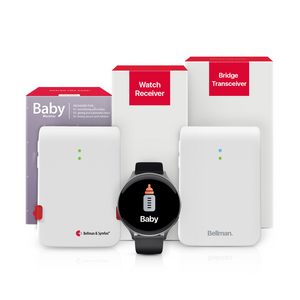
Parents with hearing loss can sleep confidently by placing a baby monitor transmitter in the nursery paired with the Bellman Bluetooth Bridge and a vibrating wrist receiver. A strong wrist vibration and bright icon alert wake parents the moment the baby needs attention - no hearing aids required. For deep overnight coverage, a bed shaker and flashing Alarm Clock Receiver handle alerts even when the Watch is charging, ensuring parents never miss a critical nighttime event.
Why Nighttime Is the Hardest Part of Parenting With Hearing Loss
Most parenting challenges are visible during the day. But for parents with hearing loss, the real vulnerability arrives at night. The moment hearing aids come out or cochlear implant processors go on the charger, a wall goes up. A crying baby two rooms away might as well be silent. A smoke alarm three hallways down is inaudible. A visitor pressing the doorbell at 10 p.m. generates no signal you can perceive. The house is physically present around you, and completely unreachable at the same time.
This is not a failure of parenting. It is a failure of tools. Standard audio baby monitors, standard smoke alarms, and standard doorbells are designed for hearing people. They communicate entirely through sound. For deaf and hard-of-hearing parents, those tools simply do not work at night - and no amount of "turning up the volume" or "putting the monitor next to your pillow" reliably solves the problem when hearing aids are removed for sleep.
The solution is to replace the output channel entirely. Instead of asking sound to do the work, the right nighttime alerting system uses vibration, flashing light, and physical movement to deliver the same information to a parent who is asleep, hearing-aid-free, and relying on senses that hearing loss cannot diminish. This guide explains what that looks like in practice - the tools, the tips, the setup decisions, and the specific considerations that make nighttime parenting with hearing loss genuinely manageable rather than perpetually anxious.
The Nighttime Toolkit: What Actually Wakes a Deaf or Hard-of-Hearing Parent
Before getting into tips and setup, it is worth naming the physical tools that make nighttime parenting with hearing loss possible. Each one addresses a different sensory channel - and used together, they create a redundant alerting layer that does not depend on any single device working perfectly at 2 a.m.
Vibrating Wrist Receiver
The Bellman Watch Receiver worn on the wrist vibrates with a distinct, alert-specific pattern and displays a clear icon - baby, doorbell, smoke, or phone. The primary daytime tool; at night, it is on the charger, which is why additional nighttime layers matter.
Bed Shaker
A flat pad that slides under the mattress or pillow and vibrates firmly enough to rouse a sleeping adult without any audio. The most reliable nighttime wake-up tool for parents who sleep without hearing aids. Works through memory foam, pillow-top, and thick mattresses when correctly positioned.
Flashing Light / Strobe Alarm
A plug-in receiver that flashes a connected lamp or produces a strong strobe output in the bedroom when an alert fires. Bright enough to register through closed eyelids in a dark room. Works as a simultaneous secondary channel alongside the bed shaker, so two senses are engaged at once.
Smartphone Push Notification
The free Bellman Assistant app receives a labeled push notification for every alert type - baby, doorbell, smoke, phone - through the Bellman Bluetooth Bridge. Useful as an overnight backup for parents who keep their phone face-up on the nightstand and respond to screen brightness.
The critical insight here is that no single tool covers every scenario. A wrist receiver is unbeatable during the day, but may be charging overnight. A bed shaker is excellent for deep sleep, but requires the Bridge to be powered. A phone notification works if the phone is face-up and the screen brightness is high enough to register in a dark room. The best nighttime setup uses at least two of these channels simultaneously - which is exactly what the Alarm Clock Receiver in the Bellman system is designed to do.
The Alarm Clock Receiver: The Nighttime Core of the System
If you take away one piece of information from this guide, let it be this: for deaf and hard-of-hearing parents, the Alarm Clock Receiver is not an optional add-on. It is the nighttime core of a complete alerting system, and it solves the specific problem that wrist receivers alone cannot - waking a parent who is in deep sleep, with no hearing aids, in a dark room, with the Watch sitting on the charger.
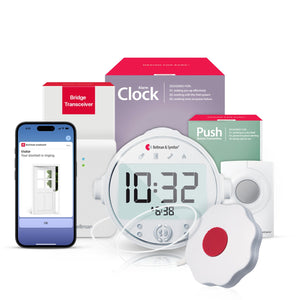
The Alarm Clock Receiver connects to the Bellman Bluetooth Bridge and fires three simultaneous outputs the moment the Bridge receives a nursery alert:
- A bed shaker under the mattress that vibrates with enough force to physically rouse a sleeping adult - even through a thick memory foam mattress or a pillow-top layer, when the pad is correctly positioned.
- A strong flashing light output that illuminates the bedroom - visible through closed eyelids in a dark room, creating a visual disturbance that complements the physical vibration of the bed shaker.
- A 100 dB audible alarm for household members with residual hearing, or for partners or family members without hearing loss who also need to be aware of the alert.
All three outputs fire simultaneously the moment the baby monitor transmitter in the nursery detects a cry. The whole sequence - from baby crying to bed shaking and room flashing - takes moments. No audio, no delay, no cloud dependency. Direct signal from nursery transmitter to Bridge to Alarm Clock Receiver beside your bed.
Which Bundle Includes the Alarm Clock for Nighttime Coverage?
For baby monitoring with full nighttime coverage, the right bundle is the Bridge + Baby + Alarm Clock. This includes the Bluetooth Bridge, the Baby Monitor Transmitter, and the Alarm Clock Receiver with bed shaker - everything needed to handle nighttime nursery alerts without hearing aids. The Watch Receiver can be added separately for daytime wrist alerts when the Watch is on your wrist, and the Alarm Clock Receiver is not needed.
If you also need smoke and fire monitoring overnight - and every parent should - the Bridge + Smoke + Alarm Clock bundle connects a smoke alarm transmitter to the same Alarm Clock Receiver, so a fire at 3 a.m. shakes the bed and flashes the room just as urgently as a crying baby. For homes with a push button or doorbell transmitter, the Bridge + Push + Alarm Clock covers those alerts through the same nighttime layer, too.
Baby cries at 2 a.m.: Bridge receives signal → Alarm Clock Receiver fires → bed shaker vibrates under mattress + room flashes + 100 dB alarm sounds → parent wakes. Hearing aids out. Watch charging. Full coverage.
Smoke alarm activates at 3 a.m.: Same Bridge, same Alarm Clock Receiver, same bed shaker and room flash - now for a fire alert. A single Alarm Clock Receiver handles every alert type through the Bridge.
Doorbell rings at night: Silent alert to your Watch (if it is on your wrist) or to the Bellman Assistant app. No audible chime disturbs the house. Baby stays asleep. You are informed.
Daytime vs. Nighttime Coverage: How the Two Layers Work Together
A complete alerting system for a parent with hearing loss is not one device - it is two coordinated layers that hand off seamlessly as the day transitions to night and back again. Understanding both layers helps you configure the system so there is never a coverage gap, regardless of whether you are wearing hearing aids, moving through the house, or asleep in a dark room.
The Watch Receiver on your wrist is the primary daytime tool. It vibrates with a distinct pattern for each alert type and displays an icon - baby, doorbell, smoke, phone - so you always know at a glance what needs your attention. Up to 650 feet of Bluetooth range from the Bridge means the Watch stays connected in the backyard, the basement, the garage, or anywhere else in and around the home. The Bellman Assistant app on your phone acts as a simultaneous second channel.
The Alarm Clock Receiver by your bedside handles nighttime. Watch on the charger, hearing aids out - when the baby cries, the bed shaker fires, the room flashes, the alarm sounds. No wrist device needed. No hearing device needed. The transition is seamless: put the Watch on the charger when you go to bed, and the Alarm Clock Receiver takes over automatically through the same Bridge. No app reconfiguration. No mode switching.
A system with a wrist receiver but no nighttime bed shaker layer has a real coverage gap from the moment the Watch goes on the charger until the parent wakes and puts it back on. During that window, a crying baby, a smoke alarm, or a fire could generate no alert that reaches the sleeping parent. For wrist-only systems, parents sometimes resort to sleeping with the Watch on - uncomfortable, accelerates battery wear, and still not guaranteed to wake from deep sleep.
The Bridge runs continuously. The Alarm Clock Receiver is always listening through the Bridge. The Watch charges undisturbed. At the exact moment an alert fires, the bed shaker activates and the room flashes - simultaneously, independently of whether the Watch is charged, whether the phone is nearby, and whether the parent has residual hearing. The nighttime layer fills the gap that wrist-only systems leave open.
Practical Tips for Sleeping Confidently With Hearing Loss
Good tools are the foundation, but the way you set them up and use them makes a real difference in how reliably they serve you night after night. These are the practical decisions that experienced parents with hearing loss have found most useful - drawn from common setup questions and real-world use of the Bellman system.
Tip 1 - Position the Bed Shaker Under Your Actual Mattress, Not a Pillow
The bed shaker pad that comes with the Alarm Clock Receiver is designed to go under the mattress - not inside the pillowcase or on top of the bedding. Under-mattress positioning distributes vibration through the mattress material and into the sleeping surface you are lying on. The vibration is felt in the back, shoulders, and hips - the body areas most likely to register physical movement during deep sleep. Place the pad toward the center of the mattress, roughly where your torso rests, for the strongest wake response. Test it in darkness with hearing aids out before relying on it.
Tip 2 - Test Your Nighttime Setup Before the Baby Arrives
The worst time to discover your bed shaker does not wake you through your specific mattress is at 2 a.m. with a screaming newborn. Set up the full nighttime configuration - Alarm Clock Receiver plugged in, bed shaker under the mattress, Watch on the charger - and do a real test: hearing aids out, room dark, ask a partner or family member to trigger the transmitter, and note whether the bed shaker and room flash wake you reliably. If the vibration is too subtle through your mattress thickness, reposition the pad or consider a model with stronger output. Test before you need it.
Tip 3 - Keep the Bridge Centrally Located Between the Nursery and the Bedroom
The Bellman Bluetooth Bridge receives the 433 MHz signal from the nursery baby transmitter and relays it to the Alarm Clock Receiver and Watch via Bluetooth. Signal path matters: placing the Bridge in a central hallway or open living area between the nursery and the master bedroom gives both the incoming 433 MHz signal and the outgoing Bluetooth link the clearest possible path. Avoid tucking it behind furniture, inside cabinets, or on the floor, where the signal has to travel through unnecessary obstacles. Shelf or nightstand height works best.
Tip 4 - Use the App as an Overnight Screen Backup
Many parents with hearing loss sleep with their phone face-up on the nightstand with screen brightness turned up and Do Not Disturb turned off for the Bellman Assistant app. The Bridge sends a push notification to the app the moment any alert fires - even when the Watch is charging - so a very bright screen notification can serve as a third channel alongside the bed shaker and room flash. This is particularly useful for lighter sleepers who are sometimes aware of screen brightness before the full bed shaker cycle completes.
Tip 5 - Set Nursery Transmitter Sensitivity Before the First Night Home
The Baby Transmitter's sensitivity dial controls how loud a sound must be before an alert fires. Calibrate it during daylight hours, in the actual room, with the white noise machine or fan running at its normal setting. You want the threshold set so that the ambient room noise does not continuously trigger alerts, but a genuine cry comfortably clears the threshold. Once calibrated, the system should be reliable without manual adjustment for most nights. Revisit the setting if you add a new noise source to the nursery, move the transmitter, or notice a pattern of false alerts or missed alerts.
Tip 6 - Brief Your Partner or Co-Parent on the System
If you share parenting duties with a partner who has normal hearing, the Bellman system still benefits them. The Watch and the Alarm Clock Receiver's 100 dB alarm means both parents receive the same alert simultaneously - there is no scenario where one parent hears a cry and assumes the other did too, without the other actually waking. The shared alerting system removes that ambiguity: when the baby cries, both parents know. Who gets up is a parenting decision. Whether you both know is a technology one.
The right nighttime setup does not ask a deaf or hard-of-hearing parent to sleep less deeply or keep a hearing aid in all night. It asks the technology to do more - to bridge the gap between the baby's cry and the parent's awareness without requiring hearing as an intermediary.
Bellman & Symfon - Hearing Alert System Design PrinciplesBeyond the Baby: Whole-Home Safety During Sleep Hours
One of the most important things to understand about the Bellman system is that nighttime baby monitoring does not exist in isolation from the rest of your home's safety needs. The same Bridge that handles nursery alerts also handles smoke alarms, doorbells, and push buttons - and the same Alarm Clock Receiver that wakes you for a crying baby also fires for a smoke alarm. This integration is not a convenience feature. For a parent who sleeps without hearing aids, it is a genuine safety necessity.
Smoke and CO Alerts at Night
A smoke alarm or carbon monoxide detector is designed to wake sleeping occupants with a loud audible siren. For a parent with hearing aids removed, that siren may be inaudible - especially in a home with multiple floors, insulated walls, or a closed bedroom door. The right solution is a smoke alarm transmitter connected to the Bellman Bridge, so a smoke or CO event fires the same bed shaker, room flash, and 100 dB Alarm Clock output as a baby alert. The Bridge + Smoke + Alarm Clock bundle builds exactly this - and it runs on the same Bridge as the baby monitor, so both alerts flow through the same nighttime layer. For a full guide to how baby monitoring and smoke safety work together, see deaf parenting: how to stay safe and connected at home.
The Doorbell Does Not Have to Wake the Baby
A late-night visitor or a package delivery doorbell ring can wake a sleeping infant - and a traditional loud doorbell chime echoing through the house is exactly the kind of sudden sound that jolts a baby awake right when you finally got them settled. With the Bellman system, the doorbell alert routes silently to your Watch and app as a vibration and notification. No audible chime. No sudden noise. The baby stays asleep. You know someone is at the door. The Push Button transmitter works the same way - if a family member needs to signal from another room without shouting, the Bridge + Push + Alarm Clock bundle enables a silent call-for-attention that reaches your Watch and your Alarm Clock Receiver without disturbing the nursery.
Phone Calls While the Baby Sleeps
An incoming phone call can also trigger a visual flash on connected receivers through the Bellman Bridge - alerting you to the call without a ringtone echoing down the hall toward the nursery. You answer on your phone privately. The baby's sleep is undisturbed. For parents who frequently miss calls because their phone is in another room and ringtones are inaudible without hearing aids, this is a genuinely useful feature that the Bridge enables as part of the same integrated system.
- Smoke or CO alarm not connected to the Bridge - inaudible overnight with hearing aids out
- No bed shaker in the bedroom - the Watch alone cannot wake a deeply sleeping parent
- Bridge placed in a corner or on the floor - weak signal to transmitters and Watch
- Alarm Clock Receiver not tested through actual mattress before first night of use
- App notifications muted or Do Not Disturb active during overnight hours
- Baby transmitter sensitivity not calibrated with white noise machine running
- No nighttime plan for power outages - consider a UPS for the Bridge
- Phone not charged or face-down on nightstand - misses screen notification backup
Hearing Loss, Sleep Anxiety, and Why the Right System Matters Emotionally
It is worth acknowledging something that practical guides sometimes skip over: the emotional dimension of nighttime parenting with hearing loss. For many deaf and hard of hearing parents, the anxiety of missing a baby's cry is not just a logistical concern - it is a persistent background worry that can actively damage sleep quality, even on nights when the baby sleeps soundly.
When parents know their alerting system works - when they have tested it, confirmed the bed shaker wakes them reliably, verified the app notifies, and experienced the system responding as expected on real nights - that anxiety tends to diminish significantly. The technology earns trust not by being perfect in theory but by being demonstrably reliable in practice. This is why the recommendation to test thoroughly before the first night home is not just a setup tip. It is an investment in your own peace of mind and sleep quality as a parent.
Parents who report the most confidence in nighttime monitoring tend to share a few things in common: they use both a bed shaker and a visual flash together rather than relying on a single channel, they have tested the system with hearing aids out before needing it, and they understand exactly which Bridge alert corresponds to which icon on the Watch. That clarity - knowing what each alert means without having to interpret an ambiguous signal - is a meaningful part of what makes the Bellman system's icon-based approach so practical for sleep-deprived parents responding at 3 a.m.
Setting Up Your Nighttime Alerting System: Step by Step
Here is a practical setup sequence for parents preparing for nighttime baby monitoring with the Bellman Baby Monitor System. Follow these steps in order and complete the tests before your first night of reliance.
- Place the Baby Transmitter in the nursery. Position it on a shelf or dresser within 3 to 6 feet of the crib, microphone facing the crib. Battery-powered - no outlet needed. Keep it out of the baby's future reach.
- Plug the Bridge into a central location. A hallway, living room, or room between the nursery and the master bedroom is ideal. Shelf or nightstand height gives the clearest signal path. Avoid corners, cabinets, and floor-level placement.
- Position the Alarm Clock Receiver at your bedside. Plug it into the outlet closest to your bed. If you have the Bridge + Baby + Alarm Clock bundle, pair the Alarm Clock Receiver to the Bridge following the pairing instructions - typically a button hold on each device.
- Slide the bed shaker under your mattress. Position the pad toward the center of the mattress, roughly under your torso. The cable runs from the bed shaker to the Alarm Clock Receiver at bedside. Ensure the cable is tucked safely away from foot traffic.
- Pair the Watch Receiver to the Bridge for daytime. Hold the Watch Receiver near the Bridge and follow the pairing sequence. Test it with the transmitter's test button to confirm the baby icon fires on the Watch.
- Install the Bellman Assistant app. Free on the App Store (iOS 15+) and Google Play (Android 8.0+). Pair to the Bridge via Bluetooth. Set the app to bypass Do Not Disturb for overnight use. Place the phone face-up on the nightstand.
- Calibrate transmitter sensitivity. Run the nursery at its normal ambient noise level. Trigger the transmitter test button and confirm the Watch fires. Then let the room run and confirm the transmitter does not fire on ambient noise alone.
- Run a full nighttime test. Hearing aids out, room dark, Watch on charger, phone face-up. Ask a partner or family member to trigger the nursery transmitter and confirm the bed shaker fires, the room flashes, and the phone screen notifies. Adjust bed shaker position if the vibration is too subtle.
Confirm Every Item Before Your First Overnight
Every item on this list represents a gap that could mean missing an alert when it matters most. Work through it completely before relying on the system overnight.
- Baby Transmitter placed 3–6 ft from crib, mic facing crib
- Bridge in central location, shelf height, powered on
- Alarm Clock Receiver paired to Bridge, placed at bedside
- Bed shaker under mattress, positioned under torso area
- Watch Receiver paired - baby icon confirmed on test
- Bellman Assistant app installed, notifications enabled
- Do Not Disturb bypassed for Bellman app alerts
- Phone face-up on nightstand overnight
- Transmitter sensitivity calibrated in real room conditions
- Full nighttime test completed - hearing aids out, room dark
- Bed shaker confirmed perceptible through your mattress type
- Room flash confirmed visible through closed eyelids
Alert Tools Compared: What Works, What Doesn't, and When
| Alert Method | Works While Sleeping? | Hearing Aids Required? |
|---|---|---|
| Audio baby monitor | No - inaudible without hearing aids | Yes - audio only |
| Vibrating wrist receiver (Watch only) | Partial - only if wearing the Watch while asleep | No - wrist vibration is independent of hearing |
| Smartphone push notification | Partial - only if phone is face-up, screen bright, DND off | No - visual screen alert |
| Bed shaker (under mattress) | Yes - physical vibration wakes regardless of sleep depth | No - entirely tactile |
| Flashing / strobe light alert | Yes - visible through closed eyelids in dark room | No - entirely visual |
| Alarm Clock Receiver (bed shaker + flash + 100 dB) | Yes - three simultaneous channels, no hearing required | No - designed specifically for hearing loss overnight use |
Common Questions From Parents With Hearing Loss
Can I Wear the Watch to Bed Instead of Using a Bed Shaker?
Some parents do wear the Watch to bed, particularly early on when they are not yet fully confident in the nighttime setup or when the baby is very young and sleep is already light and broken. The Watch does vibrate if worn overnight and an alert fires. However, this is not a recommended long-term approach: battery life is affected by continuous overnight use, the vibration that wakes you effectively during the day may not be strong enough to rouse you from genuine deep sleep, and wearing a device on your wrist all night can affect your own sleep quality over time. The bed shaker and room flash are designed specifically for the overnight scenario - use them.
What if My Mattress Is Very Thick and the Bed Shaker Seems Weak?
Mattress thickness and material both affect how strongly bed shaker vibration transmits to the sleeping surface. Memory foam in particular can absorb vibration more than spring-based mattresses. If the vibration feels too subtle when you test it, try repositioning the pad closer to the center of the mattress or slightly toward your shoulder area rather than hip level. For very thick memory foam mattresses, placing the pad between the mattress and the box spring (rather than between the mattress and the mattress protector) can increase perceived vibration strength significantly.
Will the Smoke and Baby Alerts Come Through the Same Alarm Clock Receiver?
Yes. The Alarm Clock Receiver is connected to the Bridge, and the Bridge handles every transmitter type - baby monitor, smoke alarm, doorbell, push button. All alerts route through the same Alarm Clock Receiver with the same bed shaker and room flash output. If you want to know which specific event triggered the alert at night, the Bellman Assistant app on your phone will show a labeled notification identifying the event type, even if the Alarm Clock Receiver's physical outputs (vibration and flash) are identical for all events.
Can the System Alert Me for the Baby Without Waking My Partner?
Partially. The bed shaker under the mattress is felt by anyone sleeping on the bed, so it will typically wake both partners. The Watch Receiver on your wrist alerts only you. For parents who want to be the primary nighttime responder without waking a sleeping partner every time, wearing the Watch to bed (for light sleep periods) or placing the phone on your side of the bed rather than centrally can focus the alert on you specifically. A separate Watch for each partner also allows both to be independently alerted through their own wrist device.
Does the System Work in an Apartment Without a Dedicated Nursery?
Yes. The Baby Transmitter is battery-powered and compact. In a studio or one-bedroom apartment where the baby's sleep area is in the same room or adjacent, the transmitter-to-Bridge range is more than sufficient, and the Bridge-to-Watch Bluetooth range covers a typical apartment layout with ease. The system's flexibility - no drilling, no wiring, no permanent installation - also makes it suitable for rental properties. For a full guide to apartment-specific setups, see our guide on deaf parenting, home safety, and the right tech for every living situation.
The Bigger Picture: Confidence Is the Goal, Not Just Coverage
The practical goal of a nighttime alerting system for a parent with hearing loss is not just technical coverage - it is confidence. The confidence to put your hearing aids on the charger and actually sleep, knowing that if your baby needs you, you will know. The confidence that a smoke alarm at 3 a.m. will reach you in time to act. The confidence that a late-night visitor will not go unanswered because the doorbell was silent to you and loud enough to wake the baby.
That confidence is built through the same steps every time: setting up the right tools, testing them in realistic conditions, and experiencing them working as promised. The Bellman Baby Monitor System is designed to earn that trust - not by being complicated, but by being reliable, testable, and expandable as your family's needs change.
A family that starts with the Bridge + Baby + Alarm Clock bundle for a new infant can add the Watch Receiver for daytime wrist alerts, expand with a smoke transmitter through the Bridge + Smoke + Alarm Clock for fire safety, and add a push button through the Bridge + Push + Alarm Clock as a silent in-home call system - all running through the same Bridge, the same Watch, the same app. One system for every alert your family will ever need. For a complete overview of the full Bellman alerting platform, see our guide to the best baby monitors for deaf parents.
Ready to sleep confidently - with your hearing aids off?
The Bridge + Baby + Alarm Clock bundle covers nighttime with a bed shaker and room flash the moment your baby needs you. Add the Watch Receiver for complete daytime wrist coverage, too.
Sources and references: Bellman & Symfon - Baby Monitor System with Bluetooth Bridge and Watch Receiver product specifications (us.bellman.com/products/baby-monitor-system-with-bluetooth-bridge-and-watch-receiver) · Bellman & Symfon - Bluetooth Watch Receiver BE3330 specifications: Bluetooth 5, up to 650 ft open-field range, icon-based display, multi-day battery life (us.bellman.com/products/bluetooth-watch-receiver) · Bellman & Symfon - Alarm Clock Receiver specifications: 100 dB audio output, integrated bed shaker, flashing lamp output, compatible with all Bridge transmitter types · Bellman & Symfon - Bluetooth Bridge BE1521 specifications: 433 MHz transmitter input, Bluetooth 5 output, supports multiple simultaneous transmitters (us.bellman.com/collections/bluetooth-bridge) · Bellman & Symfon - Bellman Assistant App: free, iOS 15+, Android 8.0+, Bluetooth-based push notifications, no subscription required · National Institute on Deafness and Other Communication Disorders (NIDCD) - Quick Statistics About Hearing (nidcd.nih.gov/health/statistics/quick-statistics-hearing) · Bellman & Symfon - Bridge + Baby + Alarm Clock bundle (us.bellman.com/products/doorbell-monitoring-system-with-bluetooth-bridge-and-alarm-clock) · Bellman & Symfon - Bridge + Smoke + Alarm Clock bundle (us.bellman.com/products/smoke-fire-monitoring-system-with-bluetooth-bridge-and-alarm-clock) · Bellman & Symfon - Bridge + Push + Alarm Clock bundle (us.bellman.com/products/push-button-notification-system-with-bluetooth-bridge-and-alarm-clock).
This article is for informational purposes only. Product specifications are subject to change; refer to the current product pages at us.bellman.com for the most up-to-date technical details. This content does not constitute medical or audiological advice. Consult a qualified audiologist or healthcare provider for guidance specific to your hearing loss and assistive device needs.

Sleep and Parenting With Hearing Loss: Practical Tips and Alert Tools That Help
This guide breaks down the practical choices, features, and considerations behind this topic. Use it to identify a setup that fits the listener, the environment, and the everyday moments that matter most.
The featured products below are current Bellman options discussed in the article or closely matched to its use case.