Shift Workers' Guide to Waking Up on a Different Schedule

Waking up at 2 pm to start a night shift, or at midnight for a rotating schedule, fights your body's biology in a way a 7am wake-up never does. Here's why that specific kind of wake-up is so much harder, and how to build an alarm setup that actually works with - not against - an irregular schedule.
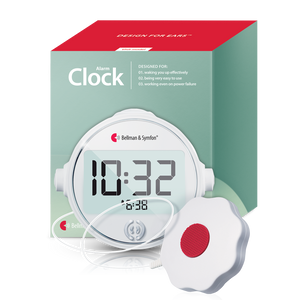
Shift workers struggle to wake on schedule because they're often waking during a circadian low point - the body's natural dip in alertness - rather than near its natural wake window, which produces heavier sleep inertia regardless of how much sleep came before. The fix is the same layered-alert principle that works for any heavy sleeper, adapted for irregular hours: a silent, app-controlled vibration alarm like Vibio for daytime sleep in a shared household, or a full multi-sensory device like the Alarm Clock Pro when sound isn't a concern. Both bypass the sound-habituation and hearing-dependent weaknesses that make shift work especially hard on a standard alarm clock.
Why Shift Work Makes Waking Up Fundamentally Harder
Every alarm clock is, in effect, competing against your body's circadian rhythm - the roughly 24-hour internal clock, governed by the brain's suprachiasmatic nucleus, that regulates alertness, body temperature, and hormone release across the day and night. For most people working a standard daytime schedule, the alarm goes off close to the body's natural wake window, when cortisol is already rising and alertness is climbing on its own. The alarm and the biology are working in the same direction.
Shift workers frequently don't have that advantage. Waking at 2pm after a night shift, or at midnight to start a rotating shift, often means waking during or near a circadian low point - a window when the body's internal clock is still oriented toward sleep, regardless of how many hours were actually logged beforehand. This produces a heavier, harder-to-shake grogginess known as sleep inertia, and it's a fundamentally different problem from simply being "a heavy sleeper" in the arousal-threshold sense, even though the two frequently show up together and call for a similar layered-alert solution.
The Circadian Problem, Explained
Your internal clock doesn't automatically follow your schedule
Switching to a night shift doesn't immediately switch your circadian rhythm along with it. Light exposure - particularly daylight - is the primary cue the suprachiasmatic nucleus uses to set its clock, and most night-shift workers are still exposed to at least some daylight during their sleep period or on days off, which slows the rhythm's ability to fully invert. The practical result is a body clock that's perpetually somewhat out of step with the actual sleep schedule, even for experienced shift workers years into the routine.
Rotating shifts never let the rhythm settle
Fixed night-shift workers at least have the chance to partially adapt over time. Rotating schedules - day shift one week, night shift the next - don't allow enough consistency for the circadian rhythm to meaningfully shift at all, which is part of why rotating-shift workers often report the heaviest sleep inertia and the most difficulty waking on schedule among all shift-work patterns.
Sleep inertia compounds the effect
Sleep inertia - the temporary grogginess and reduced alertness immediately after waking - happens to everyone, but tends to be more pronounced when waking during a circadian low point or from deep sleep, both of which are more likely for shift workers. This means the alarm's job isn't finished the moment it wakes you; a wake-up signal strong enough to get you upright but not strong enough to keep you there can leave you drifting back toward sleep within minutes.
A day-shift worker's alarm is working with their biology. A night-shift worker's alarm is working against it. That's not a motivation problem - it's a measurable circadian mismatch, and it calls for a stronger, more deliberate wake-up system than "set a louder alarm."
Bellman & Symfon - Sleep & Alerting Research NotesWhy Standard Alarm Advice Doesn't Work for Shift Workers
Most alarm clock advice assumes a household that's asleep at night and awake during the day. Shift work breaks that assumption in ways that create specific, practical friction.
| Situation | Standard Daytime Worker | Shift Worker |
|---|---|---|
| Wake time vs. circadian rhythm | Close to natural wake window; alertness already rising | Often during a circadian low point; alertness working against the alarm |
| Household noise tolerance | A loud alarm rarely disturbs others also awake at that hour | A loud daytime alarm can wake a partner, roommate, or children who are awake and active |
| Room darkness | Natural darkness supports sleep without extra effort | Often requires blackout curtains, which can also block a light-based alarm's visibility if not positioned carefully |
| Schedule consistency | Same wake time daily supports habituation to one alarm setup | Rotating schedules mean the alarm needs to adapt across multiple wake times, not just one |
None of these are reasons to give up on a reliable alarm - they're reasons the setup needs to be chosen deliberately, rather than defaulting to whatever worked for a 7 am wake-up.
Building a Reliable Wake-Up System for Irregular Hours
- Prioritize vibration over volume in shared households. A bed shaker alarm reaches you without waking anyone else who's active during your sleep hours - solving the daytime-noise problem that a louder alarm makes worse.
- Choose an app-controlled alarm if your schedule rotates. A phone-based system lets you adjust wake times quickly between shift patterns, rather than manually resetting a dial-based clock each time your schedule changes.
- Keep the device within reach regardless of room darkness. Blackout curtains that support daytime sleep can also make a flashing-light alarm less effective if it's positioned somewhere you're not facing - vibration doesn't have this limitation.
- Build in redundancy for the circadian low point. Because sleep inertia tends to be heavier for shift workers, a multi-channel alarm - vibration plus sound, or vibration plus light - gives you a better chance of staying awake once you're up, not just waking briefly and drifting back off.
The Vibio wireless bed shaker is controlled entirely through a smartphone app, supports up to 10 stored alarms, and produces no sound at all. For a rotating-shift worker, that means switching between a 6 am alarm and a midnight alarm is a few taps rather than a full clock reset, and a partner or roommate on a different schedule never has to be disturbed by the transition. It's rechargeable rather than wired, and continues to fire stored alarms even if the phone itself is powered off overnight.
Matching the Setup to Your Specific Shift Pattern
A consistent daytime sleep and wake time allows some circadian adaptation over weeks. A full multi-sensory device like the Alarm Clock Pro works well if household noise isn't a major concern.
Frequent wake-time changes make an app-controlled alarm the practical choice. Vibio lets you store multiple alarms for different rotation weeks without resetting hardware each time.
A silent, vibration-only alarm avoids disturbing a partner, roommate, or children awake during your sleep hours - again pointing to Vibio or a sound-disabled Alarm Clock Classic.
- Using the same loud alarm setup as a daytime-schedule household member
- Relying on a light-based alarm behind blackout curtains without checking visibility
- Manually resetting a dial-based clock every time a rotation changes
- Assuming sleep inertia will pass immediately upon waking
- Not accounting for daylight exposure undermining circadian adaptation on days off
- Skipping a backup channel because "the alarm has worked before"
- Placing the device across the room to avoid disturbing a partner, reducing its effectiveness
- Ignoring how quickly grogginess can lead back to sleep without a second alert
Confirm these for your specific schedule
Run through this before your next rotation change.
- Does your alarm rely primarily on vibration rather than sound?
- Can you store or quickly adjust multiple alarm times?
- Will the alarm disturb others active during your sleep hours?
- Have you tested it during an actual daytime sleep period, not just at night?
- Does your household know not to interrupt planned sleep hours?
- Do you have a backup channel in case sleep inertia pulls you back under?
- Is your device rechargeable or does it need consistent power access?
- Have you accounted for daylight exposure affecting your circadian adaptation?
Frequently Asked Questions
Why is it harder to wake up after a night shift than after a normal night's sleep?
Waking after daytime sleep often means waking during or near a circadian low point, when the body's internal clock is still oriented toward sleep - producing heavier sleep inertia regardless of total sleep duration.
What's the best alarm clock for someone on a rotating shift schedule?
An app-controlled, vibration-based option like Vibio allows quick adjustment between different wake times without resetting physical hardware each time your rotation changes.
How can I wake up for a day shift without disturbing my family who sleep at night?
A bed shaker alarm delivers a completely silent, vibration-only wake-up, which solves this specific problem without requiring anyone to compromise on their own schedule.
Does the body ever fully adjust to night shift work?
Partial adaptation is possible with a consistent fixed schedule, but most night-shift workers retain some daylight exposure on days off, which limits full circadian adaptation. Rotating schedules generally prevent meaningful adaptation altogether.
Should shift workers use a different alarm than day-shift workers?
The underlying principles - layered sensory channels, reliable placement - are the same, but the specific priorities shift: silence for shared households, app control for rotating schedules, and extra redundancy for heavier sleep inertia.
Build a wake-up system that fits your actual schedule
From the silent, app-controlled Vibio to the fully-loaded Alarm Clock Pro, find the right setup for your shift pattern.
Sources and references: Centers for Disease Control and Prevention (CDC) - NIOSH Training for Nurses on Shift Work and Long Work Hours; Sleep and Sleep Disorders · Sleep Foundation - Circadian Rhythm and Shift Work; Sleep Inertia · National Institute on Deafness and Other Communication Disorders (NIDCD) - Hearing Loss Statistics · Bellman & Symfon - Product specifications and testing: Vibio, Alarm Clock Pro, Alarm Clock Classic.
This article is for informational purposes only and does not constitute medical advice. Consult a healthcare provider or sleep specialist for concerns about shift work sleep disorder or persistent excessive daytime sleepiness.

Shift Workers' Guide to Waking Up on a Different Schedule
This guide breaks down the practical choices, features, and considerations behind this topic. Use it to identify a setup that fits the listener, the environment, and the everyday moments that matter most.
The featured products below are current Bellman options discussed in the article or closely matched to its use case.