Daytime vs Nighttime Alerting: Building a 24-Hour System

Most people build their alerting system around one problem - the one that frustrated them first. A missed doorbell. A smoke alarm they couldn't hear. A morning alarm they slept through. This guide shows you why one problem is never the whole picture, and how to build a system that closes every alerting gap from 6 a.m. to 6 a.m.
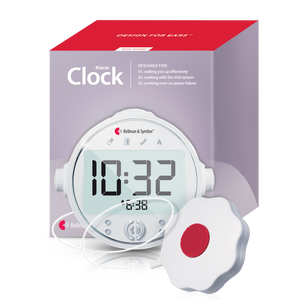
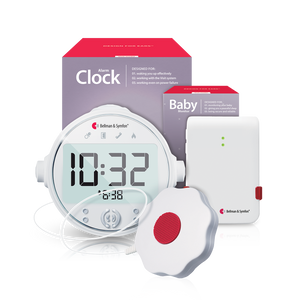
A complete 24-hour alerting system for deaf and hard-of-hearing people has two distinct layers, each designed for a fundamentally different physical state. The daytime layer is built around the Bellman Watch Receiver - worn on the wrist, it delivers silent vibration alerts for every connected transmitter (doorbell, smoke alarm, phone, baby monitor) anywhere in the home via the Bluetooth Bridge. The nighttime layer is built around the Bellman Alarm Clock Receiver and Bed Shaker - placed at the bedside and under the mattress, they deliver multi-sensory alerts (100 dB sound, flashing light, powerful vibration) when hearing aids are out and wrist devices are charging. The same transmitters serve both layers simultaneously: one set of sensors, complete day-and-night coverage. Both layers are required for genuine 24-hour protection - neither one alone is sufficient.
The Gap Nobody Sees Coming
Ask most people with hearing loss what alerting gap worries them most, and they will name one of two things: missing a doorbell during the day, or failing to hear a smoke alarm at night. These are real and legitimate concerns - but focusing on one while leaving the other unaddressed produces a system with a predictable eight-to-sixteen-hour hole in coverage every single day.
The alerting challenge for deaf and hard-of-hearing people is not a single problem with a single solution. It is two problems - one daytime, one nighttime - that occur in different physical states, require different alert delivery mechanisms, and need different hardware to solve. A vibrating wristband worn during the day does not help you when it is charging on the nightstand at 2 a.m. A bed shaker under your pillow at night does not alert you when you are cooking in the kitchen at 2 p.m. The two devices are not competing alternatives. They are complementary halves of a complete system.
This guide is the complete architecture document for that system. It explains precisely what each layer covers, what each one requires, how they share the same transmitter infrastructure, and how to build out from a starting point of one layer to a fully integrated 24-hour setup. Whether you are starting from zero or filling a gap in a system that already partially works, this is the guide that maps the full picture.
The Two Alerting States: Waking and Sleeping
Human alerting needs divide naturally into two states that require fundamentally different solutions. Understanding why they are different - not just that they are different - is what makes the system architecture make sense.
The waking state
During waking hours, you are mobile, cognitively active, and distributed across different rooms of the home. You may be in the kitchen when the doorbell rings. You may be in the backyard when the telephone sounds. You may be in an upstairs room when a smoke alarm activates on another floor. The waking-state alerting challenge is a distribution problem: alerts happen at fixed points in the home, but you are not fixed at those points. The solution is a mobile alert receiver that travels with you - the wristband - so that wherever you are, the alert reaches you directly. The waking state also has a secondary characteristic: you are conscious and capable of receiving a subtle alert. A gentle wrist vibration is sufficient to get your attention during normal daily activity.
The sleeping state
During sleep, the alerting challenge inverts completely. You are stationary - fixed in one location, usually a bed. You are not mobile, so a fixed-position bedside receiver is entirely appropriate. But you are unconscious, which means the alert threshold is dramatically higher. A stimulus that would attract your attention while awake may not register at all in deep sleep, particularly when hearing aids have been removed. The sleeping-state alerting solution needs to produce a stimulus strong enough to arouse you from sleep, which is why the bed shaker delivers powerful whole-body vibration rather than a gentle wrist tap, and why the Alarm Clock Receiver combines three simultaneous alert channels (100 dB sound, flashing light, and bed shaker vibration) rather than relying on any single modality.
Watch Receiver + Bridge
- Worn on the wrist throughout the day
- Covers the whole home - 650 ft open-field range
- Distinct vibration patterns per alert type
- Icon display identifies the alert source
- Mirrors smartphone notifications via Bellman app
- Up to one week battery - charged overnight
- No phone, no internet, no Wi-Fi required
Alarm Clock Receiver + Bed Shaker
- Bedside unit - fixed position, no wristband needed
- Bed shaker under pillow or mattress for sleep arousal
- 100 dB alarm + flashing lights + vibration simultaneously
- Color-coded LEDs identify alert type at a glance
- Built-in alarm clock for morning wake-up
- Battery backup - fully operational during power outages
- Receives same transmitter signals as the daytime layer
The Key Insight: One Set of Transmitters Serves Both Layers
The most important architectural point in a 24-hour alerting system - and the one most often misunderstood - is that the daytime and nighttime layers share the same transmitters. You do not need a separate doorbell transmitter for the Watch Receiver and another for the Alarm Clock Receiver. You do not need duplicate smoke alarm sensors for day and night coverage. One transmitter at each alert source signals all receivers simultaneously.
How the transmitter network works
Every Bellman transmitter broadcasts on the 433 MHz radio frequency when it detects an event. This RF signal travels through walls, floors, and ceilings, and is received by every compatible receiver within range - the Bluetooth Bridge (which relays to the Watch Receiver and smartphone app), the Alarm Clock Receiver, the Flash Receiver, and the Pager Receiver all listen simultaneously. When your doorbell transmitter fires at 10 a.m., the Bridge delivers it to your Watch Receiver as a wrist vibration with a doorbell icon. When the same transmitter fires at 6 a.m. while the Watch is still charging, the Alarm Clock Receiver receives the identical RF signal and activates the bed shaker, the 100 dB chime, and the flashing light. Same transmitter. Same event. Two completely different receivers, each handling the alert appropriate to the time of day.
Daytime path: Transmitter → 433 MHz RF → Bluetooth Bridge → Bluetooth 5 → Watch Receiver (wrist vibration + icon) + Bellman Assistant app (smartphone notification)
Nighttime path: Transmitter → 433 MHz RF → Alarm Clock Receiver (100 dB alarm + flashing light + bed shaker vibration)
Both paths are active simultaneously. Both the Bridge and the Alarm Clock Receiver listen for the same 433 MHz transmitter signals at all times. The transmitters do not need to know which receiver is relevant - they broadcast, and every receiver responds. During the day, the Watch delivers the alert because you are wearing it. At night, the Alarm Clock Receiver delivers the alert because it is the active receiver at the bedside.
What this means for system expansion
The shared transmitter architecture means that every transmitter you add immediately improves both layers of coverage. If you add a Baby Cry Transmitter, it signals both the Watch Receiver during the day (wrist alert when the baby cries) and the Alarm Clock Receiver at night (bed shaker alert when you are asleep). If you add a Smoke Alarm Transmitter on a new floor, it covers both daytime and nighttime simultaneously. Each transmitter is a single investment that pays across all 24 hours.
The Daytime Layer: Watch Receiver and Bridge Architecture
The daytime layer centers on the Bellman Watch Receiver and the Bluetooth Bridge. Understanding how they work together - and how to configure them for maximum daytime coverage - is the foundation of the entire system.
The Bluetooth Bridge: the system hub
The Bridge is a wall-outlet device that sits in a central location in the home - typically a shelf, nightstand, or hallway surface on the main floor. It has two jobs: receiving 433 MHz RF signals from transmitters, and relaying those signals to the Watch Receiver and smartphone app via Bluetooth 5. It requires no Wi-Fi, no internet connection, and no subscription. Central placement matters: positioning the Bridge too close to one end of the home reduces Bluetooth range available to the Watch Receiver at the opposite end. A mid-floor, centrally located Bridge maximizes coverage to all rooms, outbuildings, and outdoor areas within the 650-foot open-field Bluetooth range.
The Watch Receiver: the mobile alert interface
The Watch Receiver is worn on the wrist throughout the waking day. When a transmitter fires, the Bridge delivers the alert to the Watch within moments - fast enough that in most cases you feel the vibration before a person with normal hearing has consciously processed the sound. The Watch uses a distinct vibration pattern for each alert type and displays a large, clear icon on screen identifying the alert source. You can identify what triggered the alert from the vibration alone, before looking at the watch face.
Smartphone notification mirroring via Bellman Assistant
The Bellman Assistant app (free, iOS and Android) connects to the Bridge and delivers home transmitter alerts to your smartphone as push notifications - providing a backup channel if the Watch is in Do Not Disturb mode. It also relays incoming smartphone notifications (calls, texts, calendar alerts, messaging apps) to the Watch as wrist vibrations, turning the Watch into a communication hub as well as a home safety receiver. For out-of-home use - at work, school, or in public - the Watch continues to mirror smartphone notifications even when the home Bridge is out of range. For a full guide to out-of-home alerting, see: Best Discreet Alert Devices for School, Work & Public Places.
Daytime charging routine
The Watch Receiver charges in approximately two hours and holds a charge for up to one week. The natural routine for a 24-hour system is to charge the Watch overnight - while the nighttime layer handles all alerts - and begin each morning at full capacity. No mid-day charging interruption. No partially charged watch during afternoon peak activity. The Watch is charged precisely during the window it does not needed to be worn.
- Bluetooth Bridge plugged in and centrally placed
- Watch Receiver paired to Bridge - vibration confirmed for each transmitter
- Bellman Assistant app installed, all notifications enabled
- Watch worn from morning until bedtime - consistent daily habit
- Bridge placement optimized for whole-home Bluetooth reach
- Do Not Disturb mode is configured for formal settings if needed
- Watch is charged overnight while the nighttime layer covers alerts
- All transmitters were tested from multiple home locations
The Nighttime Layer: Alarm Clock Receiver and Bed Shaker Architecture
The nighttime layer addresses the highest-risk alerting window: the eight-plus hours when hearing aids are out, the Watch is charging, and standard audio alerts cannot reach you. It is built around the Bellman Alarm Clock Receiver and the Bed Shaker.
Why the nighttime layer requires its own hardware
The Watch Receiver is designed to alert a conscious, waking person through a gentle wrist vibration. A sleeping person in deep sleep does not reliably register a gentle vibration on a wrist - especially if the wrist is under a blanket or the watch is on a nightstand. More fundamentally, the Watch is typically placed on a charger at night, delivering no alert at all. The nighttime layer solves this through a completely different delivery mechanism. The Bed Shaker, placed under the mattress or pillow, delivers powerful vibration through the sleeping surface - a full-body physical stimulus that wakes most people reliably from deep sleep, regardless of room orientation, light level, or sleep depth.
The three-channel alert
When the Alarm Clock Receiver is triggered by any paired transmitter, it activates all three output channels simultaneously. The bed shaker delivers strong physical vibration through the mattress or pillow. The alarm reaches up to 100 dB - audible to many people with moderate hearing loss even without hearing aids. The LED flash produces color-coded light output that identifies the alert type: smoke alerts display in one color, doorbell alerts in another, baby monitor alerts in another. When you wake to an alert at night, you can immediately understand whether to evacuate, check on the baby, or respond to a visitor - without waiting for full cognitive clarity.
Bed shaker placement: under pillow vs. under mattress
Under-pillow placement concentrates vibration through the head, neck, and upper body - for many people this is most effective for interrupting deep sleep quickly. Under-mattress placement distributes vibration across the full body surface - less intense at any single contact point, but experienced across a larger body area. Test both during the daytime in your normal sleeping position before settling on the overnight configuration. The pad's anti-slip surface holds it in position through normal sleep movement.
Battery backup: critical at night
The Alarm Clock Receiver includes built-in rechargeable battery backup that maintains full operation during power outages. This is a critical safety design decision: electrical fires are among the most common causes of residential power disruptions, meaning the exact moment when a fire safety alert is most urgently needed may be the moment when household power is interrupted. The battery backup ensures the Alarm Clock Receiver continues to function, the bed shaker continues to respond, and the flashing lights continue to operate even when the grid has failed.
The morning alarm function
The Alarm Clock Receiver is a fully functional bedside alarm clock in addition to a safety alert receiver. It's built-in alarm activates the same three-channel output - bed shaker, 100 dB alarm, and flashing lights - that emergency transmitter signals trigger. This means the system is tested every morning: if the bed shaker wakes you reliably at your alarm time, you have daily confirmation that the overnight safety layer is functioning correctly.
- Alarm Clock Receiver placed on bedside nightstand
- Bed Shaker connected and positioned under pillow or mattress
- Morning alarm set on Alarm Clock Receiver - bed shaker wake-up tested
- All transmitters tested from sleeping position - eyes closed, hearing aids out
- Smoke Alarm Transmitter tested via alarm test button from each floor
- Alarm Clock Receiver battery backup confirmed operational
- Color-coded LED alert identification verified for each transmitter type
- Bed shaker placement tested - pillow vs. mattress comparison done
Every Alert Type, Day and Night: The Complete Coverage Map
The most practical way to evaluate a 24-hour system is to walk through every alert type and confirm both layers address it. The table below maps every common home alert scenario across daytime and nighttime, showing what each layer provides.
| Alert Type | ☀️ Daytime - Watch Receiver | 🌙 Nighttime - Alarm Clock + Bed Shaker |
|---|---|---|
| Smoke alarm fires | Watch vibrates with smoke/fire icon - reach confirmed from any room or outdoor area within 650 ft of Bridge | Alarm Clock fires 100 dB alarm + flash + bed shaker simultaneously. Battery backup maintains function during power outage from fire |
| Carbon monoxide alarm | CO transmitter signals Bridge → Watch vibrates with CO icon. Direct sensor alert to wrist, no audio detection required | CO transmitter signals Alarm Clock Receiver → bed shaker activates with alternating red/orange LED to distinguish from smoke. Critical in the sleeping scenario where CO is most dangerous |
| Doorbell pressed | Watch vibrates with doorbell icon - coverage from kitchen, backyard, garage, any room. No fixed receiver needed per room | Alarm Clock Receiver alerts with flash + bed shaker for early-morning visitors or caregiving scenarios. Less common at night but fully covered |
| Baby crying | Watch vibrates with baby icon - move freely through home while infant sleeps. Coverage across all rooms and outdoor spaces | Alarm Clock Receiver activates bed shaker when Baby Cry Transmitter detects sound - overnight infant monitoring with hearing aids out. Essential for deaf parents |
| Telephone or landline ringing | Telephone Transmitter → Watch vibrates with phone icon. Whole-home phone awareness without a fixed receiver in every room | Alarm Clock Receiver can receive telephone signals - useful for early-morning calls. Most users prioritize smoke and baby alerts for overnight coverage |
| Push button / call for attention | Watch vibrates with push button icon when a household member or caregiver presses the transmitter. Watch wearer can also signal via call-for-attention button on the Watch | Alarm Clock Receiver responds to push button signals at night - useful in caregiving scenarios where a family member needs to summon overnight assistance |
| Morning wake-up alarm | Watch includes a built-in alarm function - wrist vibration for light sleepers or supplemental day-start alert | Alarm Clock Receiver built-in alarm is the primary wake-up tool - bed shaker + 100 dB + flash activates at set time. Designed specifically for hearing-aid-removed wake-up reliability |
| Power outage during safety event | Watch continues on own battery - Bridge may require UPS backup for continued Bluetooth relay during extended outage | Alarm Clock Receiver battery backup maintains full function - bed shaker, flash, and 100 dB alarm all operational during outage. Critical for fire scenarios |
| Internet or Wi-Fi outage | Full function - Bridge and Watch communicate via Bluetooth, not internet. Transmitters use 433 MHz RF. No online dependency in the daytime alert chain | Full function - Alarm Clock Receiver communicates via 433 MHz RF directly from transmitters. No internet, no Wi-Fi, no app required at any point |
The Two Transition Windows: When Coverage Is Most Vulnerable
Within the 24-hour system, the two transition points - nighttime to daytime and daytime to nighttime - are the windows of highest vulnerability. Understanding what happens at each transition, and how to manage it, is as important as understanding the layers themselves.
Hearing aids go in. The watch comes off the charger and onto the wrist. From this moment, the daytime layer is active. The risk window is the time between waking and completing these steps - the brief period when hearing aids are not yet in, the Watch is still on the charger, and the Alarm Clock Receiver is the only active alert channel. Keep the Alarm Clock Receiver operational until the Watch is on the wrist and confirmed receiving. Do not disable the nighttime layer before completing the daytime handoff.
Hearing aids come out. The watch goes on the charger. From this moment, the nighttime layer must be fully active. Place the Watch on the charger near the Alarm Clock Receiver. Confirm the bed shaker is in position. Confirm the Alarm Clock Receiver is powered and receiving signals - a quick check of the status indicator is sufficient. From the moment your hearing aids come out, assume the nighttime layer is your only active alert channel.
The transition windows - the minutes between taking off your hearing aids and confirming your nighttime layer is active - are the most frequently overlooked gap in a 24-hour alerting system. A system that works perfectly in both states but has a 20-minute uncovered gap at each transition is not a 24-hour system.
Bellman & Symfon - 24-Hour Alerting System Design NotesBuilding reliable transition habits
The most effective way to manage transition windows is to embed them into existing routines rather than treating them as separate tasks. Link the evening transition to an existing nightly habit - charging the Watch at the same time as your phone, confirming the Alarm Clock Receiver as part of a pre-bed routine already in place. Link the morning transition to the hearing aid insertion routine - putting the Watch on as part of the same sequence. When the transition is embedded in an existing habit chain, it happens reliably without a conscious decision each night.
Building Your 24-Hour System: Three Starting Points
Most people build a 24-hour system incrementally - and that is entirely appropriate. The shared transmitter architecture means every component purchased contributes to both layers, making each addition more valuable than it would be in a single-layer system.
Starting point 1: You have the daytime layer, need the nighttime layer
If you already have the Watch Receiver and Bluetooth Bridge in place, adding the Alarm Clock Receiver and Bed Shaker is straightforward. Both connect directly to your existing transmitters via 433 MHz RF - no re-pairing, no reconfiguration, no changes to the Bridge or Watch required. Place the Alarm Clock Receiver at the bedside, connect the Bed Shaker, and every transmitter already in your system immediately signals the new overnight receiver. The nighttime layer is operational from day one, and the daytime layer is completely unaffected.
Starting point 2: You have the nighttime layer, need the daytime layer
If you already have an Alarm Clock Receiver and Bed Shaker but no daytime wearable layer, the Watch Receiver and Bridge close the daytime gap. The Bridge receives the same 433 MHz transmitter signals as the Alarm Clock Receiver and relays them to the Watch. Your existing transmitters immediately begin signaling the Bridge once it is powered on - no re-pairing of transmitters required. From the moment the Watch is charged and on your wrist, daytime wearable coverage begins. The nighttime layer continues unchanged.
Starting point 3: Building from zero
If you are starting from nothing, the most comprehensive single-purchase starting point is the Smoke/Fire Alarm System with Alarm Clock Receiver, Bridge, and Watch Receiver bundle. This includes the Smoke Alarm Transmitter, Bluetooth Bridge, Watch Receiver (daytime layer), Alarm Clock Receiver, and Bed Shaker (nighttime layer) - complete two-layer coverage for the highest-priority safety alert from the first day of installation. Once this foundation is in place, additional transmitters for the doorbell, phone, and baby monitor expand both layers simultaneously.
Add Smoke + CO Coverage
The Smoke/Fire and Carbon Monoxide System with Alarm Clock and Bed Shaker covers both gases simultaneously - smoke in red, CO in alternating red/orange on the Alarm Clock LED. The highest-priority safety expansion for any home.
Add Baby Monitor Coverage
The Baby Monitor System with Alarm Clock and Bed Shaker provides overnight infant monitoring via the bed shaker layer. Add the Bridge and Watch separately for daytime wrist-alert coverage while the baby naps and you move through the home.
Add Flash Receiver for Visual Coverage
The Smoke/Fire System with Flash Receiver, Bed Shaker, Bridge, and Watch Receiver adds a room-level strobe flash as a secondary daytime visual layer - useful in rooms where you spend extended time without the Watch on your wrist.
Smoke-Only Nighttime Bundle
For users who already have CO detection elsewhere, the Smoke/Fire System with Alarm Clock and Bed Shaker provides focused smoke-only nighttime coverage. The Alarm Clock Receiver consolidates morning alarm and overnight smoke alert in one bedside unit.
Transmitter Placement for Full 24-Hour Coverage
The transmitters are the foundation of the entire 24-hour system. Their placement determines which events are detected, how quickly, and how reliably the signal reaches both the Bridge and the Alarm Clock Receiver. Getting placement right from the start avoids the most common causes of missed alerts.
Smoke Alarm Transmitter placement
Install a Smoke Alarm Transmitter on every floor of the home, including the basement if applicable. The transmitter can be used as a standalone ceiling-mounted detector using its own optical and heat sensing, or placed acoustically next to an existing alarm to detect the horn sound and relay the RF signal. For new installations, standalone mounting provides faster response because it detects smoke directly. Place transmitters outside sleeping areas on each floor to ensure the nighttime layer receives the signal regardless of which floor the fire originates on.
Bridge placement for maximum daytime range
Place the Bridge on a central floor of the home in an open area - not inside a cabinet or closet. A central main-floor placement typically provides the most even Bluetooth coverage across all rooms and floors. Verify Watch Receiver coverage by walking to the most distant areas of the home (back garden, detached garage, top-floor bedroom) and triggering a test signal. Adjust Bridge placement until full coverage is confirmed throughout all areas you regularly occupy.
Baby Cry Transmitter placement
Place the Baby Cry Transmitter near the infant's crib with the microphone positioned to reliably detect the baby's voice without triggering on ambient sounds. Adjustable sensitivity settings allow calibration for the specific acoustic environment. The delay setting prevents false triggers from brief sounds - a value of 5–10 seconds ensures the transmitter only fires when the baby has been crying continuously.
Special Configurations: Adapting the System to Your Household
Couples - Mixed Hearing Status
The Watch Receiver alerts the person with hearing loss on their wrist during the day without affecting the hearing partner. The bed shaker under the mattress wakes both partners at night - many couples consider this a feature for smoke alarm scenarios, since both need to evacuate.
Large or Multi-Story Homes
Install a Smoke Alarm Transmitter on each floor independently. Place the Bridge on the middle floor to balance Bluetooth range upward and downward. A Flash Receiver on upper floors provides a secondary visual alert in rooms far from the Bridge during daytime hours.
Older Adults Living Alone
For single-occupant households, the overnight layer takes on heightened importance - there is no household member to relay a missed alert. Battery backup on the Alarm Clock Receiver is essential. A push-button transmitter worn around the neck provides a call-for-attention function that signals the Alarm Clock Receiver if a fall occurs at night while the Watch is charging.
Apartment Living
Smaller floor plans reduce range concerns and make a single Bridge placement straightforward. A Smoke Alarm Transmitter placed near the hallway smoke detector (to detect the building alarm acoustically) extends coverage to building-level fire alerts that would otherwise not reach the home system.
Testing the Full System: Verifying Both Layers
A 24-hour alerting system that has never been fully tested is not a reliable system - it is a system that might work when it matters. Testing both layers completely, in realistic conditions, reveals gaps before a real emergency does.
Testing the daytime layer
With the Watch on your wrist, test each transmitter from the locations in the home where you are most likely to be when that alert fires. For the smoke alarm, use the test button on the existing alarm (not the transmitter's own test button) to simulate a real event. Walk to the outer boundaries of your home range - the backyard, the garage - and test again. Any location where the Watch does not receive a clear signal is a gap to address through Bridge repositioning.
Testing the nighttime layer
Testing the nighttime layer requires simulating the actual sleeping scenario. Lie in your normal sleeping position. Remove hearing aids. Close your eyes. Have a household member trigger the smoke alarm test button from outside the bedroom. Confirm the bed shaker activates, and confirm that - in your sleeping position - you actually feel the vibration strongly enough to register it. If the vibration is not clearly felt, try the alternative placement. Repeat for each transmitter type you rely on overnight. A system that works when you are awake may not work when you are in deep sleep; the sleeping-position test is the only meaningful verification.
Testing the transition windows
Walk through both transitions deliberately at least once. Evening: remove hearing aids, place the watch on charger, confirm Alarm Clock Receiver is receiving - trigger a test signal and verify the bed shaker responds. Morning: The watch is on your wrist, hearing aids are in, trigger a test signal, and verify the Watch vibrates. If either transition has an uncovered gap, address it by adjusting the routine until the gap is eliminated.
Every item confirmed for both layers
For first-time setup and any time a new transmitter or receiver is added to the system.
- Bluetooth Bridge is powered on and centrally placed
- Watch Receiver paired to Bridge - signal confirmed
- Bellman Assistant app installed, all notifications on
- Alarm Clock Receiver bedside, clock set correctly
- Bed Shaker connected - pillow vs. mattress placement chosen and tested
- Morning alarm set on Alarm Clock Receiver - bed shaker confirmed
- Smoke Alarm Transmitter on every floor - tested via test button
- Doorbell Transmitter at each entrance - Watch vibration confirmed
- Baby Cry Transmitter installed if applicable - sensitivity calibrated
- Telephone Transmitter connected if using a landline
- Push Button Transmitter is placed if needed for caregiving
- CO Alarm Transmitter installed if separate from the smoke
- Daytime layer tested from all home areas, including outdoors
- Nighttime layer tested in sleeping position - eyes closed, hearing aids out
- Evening transition routine established and practiced
- Morning transition routine established and practiced
- Battery backup on Alarm Clock Receiver confirmed
- Weekly system test scheduled - smoke alarm test button
The 24-Hour System in Context
A perfectly configured daytime wearable layer, without a nighttime layer, leaves you unprotected for eight hours every night. A perfectly configured nighttime layer, without daytime mobile coverage, leaves you missing alerts for sixteen hours every day. Neither configuration protects you completely, and both feel adequate until the moment they fail - which is often the exact moment a safety-critical alert fires at a time the system was not designed to cover.
The 24-hour system architecture is not complex. It is two devices - the Watch Receiver for the day, the Alarm Clock Receiver with Bed Shaker for the night - served by one shared set of transmitters. One investment in transmitters. Complete day-and-night coverage. For the device-level deep dive on what distinguishes wristbands from bed shakers, see Vibrating Wristbands vs Bed Shakers: Which Alert Fits Your Day. For the complete wearable alerting category overview, see the pillar guide: Best Wearable Alert Devices for Deaf & Hard of Hearing People (2026).
Ready to build your complete 24-hour system?
Browse the full Bellman alerting range - wristband receivers, alarm clock receivers, bed shakers, and complete day-and-night bundles designed to cover every alert from morning to morning.
Sources and references: Bellman & Symfon - Bluetooth Watch Receiver BE3330 product specifications: Bluetooth 5, 650 ft open-field range, up to one week battery life, distinct vibration patterns per alert type, icon display (us.bellman.com/products/bluetooth-watch-receiver) · Bellman & Symfon - Alarm Clock Receiver product specifications: 100 dB maximum output, color-coded LED alert identification, built-in battery backup, bed shaker output, night light (us.bellman.com/products/alerting-signaling-device-alarm-clock-receiver) · Bellman & Symfon - Bed Shaker product specifications: anti-slip surface, wired connection to Alarm Clock Receiver (us.bellman.com/products/bed-shaker) · Bellman & Symfon - Bluetooth Bridge Transceiver specifications: 433 MHz RF reception, Bluetooth 5 transmission, no Wi-Fi required (us.bellman.com/collections/bluetooth-bridge) · Bellman & Symfon - Smoke Alarm Transmitter: 500 ft open-field range, UL217/ULC S531 certified, optical and heat detection, up to 10-year battery life · Bellman & Symfon - Baby Cry Transmitter: adjustable sensitivity, 260 ft open-field range, tamper-proof design · National Institute on Deafness and Other Communication Disorders (NIDCD) - Assistive Devices for People with Hearing, Voice, Speech, or Language Disorders · Hearing Loss Association of America (HLAA) - Alerting and Signaling Devices; Bedroom Alerting overview · National Fire Protection Association (NFPA) - NFPA 72 National Fire Alarm and Signaling Code: requirements for visible and tactile alerting in sleeping areas for people with hearing loss.
This article is for informational purposes only. Product specifications are subject to change; refer to current product pages at us.bellman.com for the most up-to-date technical details.
Daytime vs Nighttime Alerting: Building a 24-Hour System
This guide breaks down the practical choices, features, and considerations behind this topic. Use it to identify a setup that fits the listener, the environment, and the everyday moments that matter most.
The featured products below are current Bellman options discussed in the article or closely matched to its use case.