Best Doorbell Systems for Deaf & Hard of Hearing People: Complete Buyer's Guide (2026)

A plain-English explainer on every type of doorbell alert available today - vibrating wrist receivers, smartphone alerts, flashing strobes, and whole-home systems - so you can pick exactly what fits your home, your lifestyle, and your level of hearing loss.
A deaf doorbell system uses a door transmitter that detects your existing doorbell chime or button press, then sends an instant silent alert - vibration and a visual icon - to a wrist receiver or smartphone, so hard-of-hearing people never miss a visitor. The best systems are wireless, require no electrician, and pair in under ten minutes.
- Why a standard doorbell fails people with hearing loss
- How a deaf doorbell system actually works
- The four types of doorbell alerts - and when to use each
- Bellman's doorbell systems: what's in the box
- Setup: easier than you think
- Apartments, renters, and no-drill situations
- Beyond the front door: push buttons and door alarms
- Deaf doorbell vs Ring / Nest: an honest comparison
- Night alerts and sleeping with hearing loss
- How to choose the right system for you
- Frequently asked questions
Why a Standard Doorbell Fails People with Hearing Loss
A conventional doorbell produces a brief audible chime - typically 70–80 dB at the speaker - that carries through a house for a second or two before fading. For someone with normal hearing, that's enough. For the estimated 37.5 million American adults who report some degree of hearing difficulty, it often isn't.
The problem compounds quickly. Hearing aids are frequently removed at home - while watching TV, cooking, showering, sleeping, or simply relaxing. Background noise from appliances, TVs, and air conditioning further masks the chime. And for people who are profoundly deaf, no amount of volume on a standard doorbell is sufficient.
Missing a visitor is more than a minor inconvenience. It can mean missing a medication delivery, a care visit, a family member at the door, or an emergency responder. For people living alone with significant hearing loss, a reliable door alert is a genuine safety need - not a luxury.
The good news: purpose-built doorbell alert systems have become dramatically simpler and more affordable. Today's best options are wireless, require no drilling or electrical work, set up in minutes, and deliver notifications through multiple channels simultaneously - your wrist, your smartphone, and flashing lights around your home.
How a Deaf Doorbell System Actually Works
Understanding the basic architecture makes choosing - and setting up - the right system straightforward. A modern wireless doorbell alert for the deaf or hard of hearing has three components working together.
1. The Door Transmitter
A small device placed near your existing doorbell or door button. It uses a built-in microphone to "listen" for the sound of your existing chime, or it connects directly to a wired doorbell circuit. When it detects the correct sound pattern, it sends a wireless signal instantly.
2. The Bluetooth Bridge
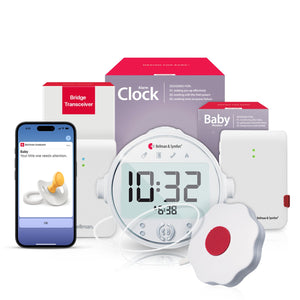
A plug-in hub that receives the signal from the door transmitter and forwards it to paired receivers. The Bellman Bluetooth Bridge is the central hub in Bellman's system - it connects all your transmitters (doorbell, smoke alarm, baby monitor) and sends alerts to all paired receivers at once.
3. The Wrist Receiver
A watch-style receiver worn on your wrist that vibrates and displays a unique icon the moment the door transmitter fires. The Bellman Bluetooth Watch Receiver shows a different icon for each type of alert - doorbell, smoke, baby - so you know exactly what needs your attention without looking at your phone.
Optional: Smartphone App
The Bellman system also supports smartphone notifications via the Bellman Connect app. When your phone is with you, you get a push notification simultaneously with the wrist vibration - useful when you're in the garden, a different floor, or anywhere outside wrist-receiver range.
Many older alert systems relied solely on flashing strobe lights. These work well in the same room, but fail the moment you're in another part of the house. A wrist receiver goes with you - into the kitchen, the garden, the bathroom - ensuring you're notified wherever you are. The combination of wrist vibration and a clear visual icon on the watch face is widely considered the most reliable notification method for profoundly deaf and hard-of-hearing users.
The Four Types of Doorbell Alerts - and When to Use Each
1. Wrist Vibration Systems (Best Overall)
A vibrating wrist receiver paired with a door transmitter and bridge is the most versatile and widely recommended solution. It works in any room, doesn't rely on Wi-Fi, doesn't require checking a phone screen, and delivers instant tactile feedback you can't ignore. This is the setup most audiologists and hearing loss advocacy organizations recommend as a starting point.
Best for: Anyone with moderate to profound hearing loss who wants reliable, whole-home coverage regardless of where they are in the house.
2. Flashing Light / Strobe Systems
Plug-in strobe units placed in rooms around the home flash brightly when triggered by the doorbell signal. These are effective in rooms where you regularly spend time - a living room or bedroom - and are a strong supplement to a wrist receiver system. They're less effective in high-ambient-light situations and only alert you when you're in the same room.
Best for: Supplementing a wrist or smartphone system, or for people with mild-to-moderate hearing loss who primarily need to catch alerts in one or two rooms.
3. Smartphone App Notifications
Push notifications to a smartphone offer flexibility - your phone is already with you most of the time, and notifications appear on screen with sound, vibration, and a visible alert. The limitation is reliability: push notifications depend on an internet connection, can be delayed, and are easy to miss when your phone is on silent, face-down, charging in another room, or has a dead battery.
Best for: A convenient secondary alert channel, not a sole notification method for people with significant hearing loss.
4. Amplified Doorbell Ringers
High-powered wired ringers (sometimes over 90 dB) and low-frequency tone changers can help people with mild-to-moderate hearing loss who primarily miss their doorbell due to background noise or distance rather than a fundamental inability to hear it. They do not help people who are profoundly deaf.
Best for: Mild hearing loss, or as a supplement to a full alert system in large homes.
Bellman's Doorbell Systems: What's in the Box
Bellman & Symfon designs its systems to be genuinely non-technical. The goal is for a non-technical person to unbox, set up, and use the system confidently - without reading a lengthy manual or calling for help. Here's what the main doorbell options include.
Doorbell System with Bluetooth Bridge and Watch Receiver

The complete starter kit: the door transmitter detects your existing chime or doorbell press, the Bluetooth Bridge relays the signal, and the Watch Receiver vibrates on your wrist and displays a doorbell icon instantly. Add the Bellman Connect app for simultaneous smartphone notifications. No tools, no electrician, no Wi-Fi dependency for the core wrist alert.
View System →Push Button System with Bluetooth Bridge and Watch Receiver

Identical to the doorbell system, but uses a dedicated push button transmitter instead of a microphone-based door transmitter. Ideal for situations where there's no existing doorbell to detect, or where you want a portable button that can be placed anywhere - bedside, in a care room, or carried by a family member. The wrist receiver vibrates and shows a distinct icon the moment the button is pressed.
View System →Both systems connect to the same Bellman Bluetooth Bridge - meaning you can expand your setup over time by adding transmitters (smoke alarms, baby monitors, additional push buttons) without replacing the bridge or the watch receiver you already have.
One of the key advantages of the Bellman system is that the Bridge and Watch Receiver work with all Bellman transmitters. Start with a doorbell transmitter today. Add a smoke/fire transmitter or baby monitor later. The same watch receiver on your wrist will vibrate - with a different icon for each alert type - so you always know exactly what's happening in your home.
Setup: Easier Than You Think
One of the most common questions from first-time buyers is: "Do I need an electrician?" The answer, for wireless systems like Bellman's, is no. Here is exactly what the setup looks like from start to finish - no tools, no wiring, no technical experience required.
From unboxing to working alert in under 10 minutes
Works with virtually any existing doorbell chime.
- Place the Door Transmitter near your existing doorbell (inside, near the chime unit) - no wiring needed; it listens for the chime sound
- Plug the Bluetooth Bridge into any standard wall outlet in a central location
- Put on the Watch Receiver and power it on
- Follow the simple pairing steps in the instruction booklet to link the transmitter → bridge → watch (takes about 2 minutes)
- Test by pressing your existing doorbell button - the watch should vibrate and show the doorbell icon within 1–2 seconds
- Optionally: download the Bellman Connect app and pair your smartphone for additional push notifications
There's no soldering, no circuit boards, no password-protected router configuration, and no cloud account required for the core wrist alert to function. If you can plug in a lamp and press a button, you can set up this system.
For a deeper walkthrough of installation, including tips for apartments and multi-floor homes, see our guide: How to install a doorbell alert system for the hearing impaired: no electrician needed.
Apartments, Renters, and No-Drill Situations
If you're renting - or simply prefer not to alter your home - a wireless doorbell alert system is ideal. Because the door transmitter is acoustic (it listens for your existing doorbell chime through its built-in microphone), there's nothing to mount on the wall, no holes to drill, and nothing to leave behind when you move out.
- The door transmitter sits on a shelf or table near your indoor chime unit - no permanent attachment required
- The Bluetooth Bridge plugs into any outlet - move it whenever you like
- The Watch Receiver goes with you; no installation at all
- The whole system is completely portable - pack it up when you travel or move
This portability also makes the Bellman system a sensible choice for people who split time between two homes, spend extended time with family, or simply want the flexibility to rearrange without any hassle.
For apartment-specific considerations - including how to handle buzzers, intercom doorbells, and shared-building entry systems - see our detailed guide: Deaf doorbell systems for apartments: what works when you can't drill.
"I've moved three times in four years. The Bellman system came with me every time - plug it in and it works. I don't have to explain anything to my landlord."
Bellman Customer ReviewBeyond the Front Door: Push Buttons and Door Alarms
A doorbell alert covers your front door. But hearing loss creates alert gaps throughout the home that a single doorbell system doesn't address. The Bellman ecosystem is designed to close all of them.
Push Button Alerts: More Than a Doorbell
The Bellman Push Button System uses the same bridge and wrist receiver but adds a portable push button transmitter that can be placed anywhere. Common uses include:
- A bedside call button for a family member to alert a caregiver or partner
- A portable "attention" button for someone with mobility limitations
- A second entrance button (back door, gate, garage) separate from your main doorbell
- A button in a workshop or studio where background noise makes the doorbell inaudible
Because the push button and the door transmitter use different icons on the watch receiver, you always know which alert is which - even if both fire within seconds of each other.
Door and Window Alarms
For home security - knowing when a door or window opens when you're not expecting it - Bellman's door alarm range uses magnetic contact sensors. When the magnetic connection breaks (door or window opens), the transmitter sends an instant alert to your watch receiver. This is particularly useful for parents of deaf children, people with PTSD or anxiety who benefit from knowing when doors open, and anyone living alone who wants an extra layer of home security without a complex monitored alarm system.
For a complete breakdown of door, window, and perimeter alert options, see: Best door alarms for hearing impaired people: door, window & perimeter alerts.
Deaf Doorbell vs Ring / Nest: An Honest Comparison
Smart video doorbells like Ring and Nest are widely advertised and genuinely useful for people with normal hearing. But they weren't designed for people with hearing loss - and the differences matter.
| Feature | Bellman Doorbell System | Ring / Nest Video Doorbell |
|---|---|---|
| Wrist vibration alert | ✓ Instant, always-on | ✗ Not available |
| Works when phone is on silent / charging | ✓ Yes - wrist receiver works independently | ✗ No - relies on phone notification |
| Works without internet | ✓ Core wrist alert requires no Wi-Fi | ✗ Requires active Wi-Fi and cloud service |
| Alert delay | 1–2 seconds (direct Bluetooth) | 2–10+ seconds (cloud dependent) |
| Privacy - no camera, no video recording | ✓ No camera, no data stored | ✗ Records video, stores in cloud |
| Setup requires professional installation | No - plug and pair in under 10 min | Often yes for wired models |
| Works for profoundly deaf users | ✓ Yes - tactile alert requires no hearing | ✗ Designed for users who can hear phone |
| Expandable to smoke, baby, push alerts | ✓ Same bridge and watch receiver | ✗ Limited to doorbell function |
The key difference: Ring and Nest notify your phone. If your phone is in another room, on silent, running low on battery, or if your internet is slow, you may not get that notification in time - or at all. A Bellman wrist receiver alerts your wrist, wherever you are, with no internet required and no phone involved.
For a detailed side-by-side, see our guide: Deaf doorbell vs smart doorbell (Ring, Nest): which actually works for hearing loss?
Video doorbells record and store footage of everyone who approaches your front door - delivery workers, neighbors, family members - and upload it to cloud servers. Bellman doorbell systems use no camera and record no data. If privacy for yourself and your visitors matters to you, a non-video alert system is the cleaner choice. We explore this topic in more depth in our guide on wired vs wireless deaf doorbell systems.
Night Alerts and Sleeping with Hearing Loss
One of the most underappreciated gaps in hearing loss safety is nighttime. When hearing aids come out and you're asleep, you're effectively cut off from every audible alert in your home - doorbell, smoke alarm, carbon monoxide detector, baby monitor. Standard smoke alarms and home security systems are designed around audible sirens that reach sleeping ears. They do not work for people who are profoundly deaf or who sleep without hearing aids.
The Bellman system addresses this in two ways: the Watch Receiver can be worn on the wrist during sleep (many users find this natural after a few nights), and Bellman offers dedicated sleep bundles that include an alarm clock with a powerful bed shaker built in.
Sleep Bundle Options (Include Alarm Clock + Bed Shaker)
If you want to ensure overnight alerts - doorbell, smoke, or baby - reach you reliably while sleeping, these bundles are designed for exactly that scenario. Each includes the Bluetooth Bridge, the alert transmitter of your choice, and an Alarm Clock with a built-in bed shaker that vibrates the mattress to wake you:
- Bridge + Smoke/Fire + Alarm Clock - for overnight smoke and fire detection
- Bridge + Door + Alarm Clock - for overnight doorbell alerts
- Bridge + Baby + Alarm Clock - for overnight baby monitor alerts
- Bridge + Push Button + Alarm Clock - for a bedside call button that alerts a partner or caregiver overnight
For daytime use, you can add the Watch Receiver separately - wear it during the day for on-wrist vibration alerts, then rely on the bed shaker at night when the watch comes off.
- Smoke and CO alarms: standard audible alarms may not wake a sleeping person with hearing loss
- A bed shaker (under-mattress vibrator) is the most reliable wake-up method for deaf sleepers
- Strobe-equipped smoke alarms provide visual alerting but require line-of-sight
- The Bellman Alarm Clock with bed shaker connects to the same Bridge as your doorbell system
- One Bridge can trigger multiple alerts simultaneously: doorbell + smoke + bed shaker at once
- Watch the battery level on your Watch Receiver - low battery = missed alerts at night
How to Choose the Right System for You
The best doorbell system for a hard of hearing person depends on four practical factors: your degree of hearing loss, your home type, whether you rent or own, and what other alerts you need to capture. Here's a quick decision framework.
If you're still unsure, the Doorbell System with Bluetooth Bridge and Watch Receiver is the right starting point for the majority of users. It delivers the most reliable alert channel (wrist vibration), works out of the box, and is expandable if your needs grow.
Frequently Asked Questions
Does this work with my existing doorbell?
In almost all cases, yes. The door transmitter uses an acoustic microphone to detect the sound of your existing chime - wired or wireless, traditional chime or electronic tone. You don't need to replace your existing doorbell. Just place the transmitter near your indoor chime unit and it listens for the sound.
What's the range of the wrist receiver?
The Bellman Bluetooth Watch Receiver typically maintains a reliable connection with the Bridge up to 30 metres (approximately 100 feet) in open space. In typical home conditions with walls, the practical range is 20–25 metres - sufficient for most single-family homes. For larger properties, placing the Bridge centrally maximizes coverage.
Can I connect multiple receivers to one Bridge?
Yes. The Bellman Bluetooth Bridge supports multiple paired receivers simultaneously, including multiple Watch Receivers and the Bellman Connect smartphone app. This is useful for couples where both partners want wrist alerts, or for households where both a wrist receiver and a smartphone should receive notifications.
What if I have no existing doorbell at all?
Use the Push Button System instead of the acoustic door transmitter. Mount or place the push button by your door, and it acts as your doorbell - pressing it triggers the wrist alert instantly with no chime unit required.
Does it need Wi-Fi?
The core wrist alert - transmitter → Bridge → Watch Receiver - uses Bluetooth and does not require a Wi-Fi connection or internet service. Smartphone push notifications via the Bellman Connect app do require an internet connection, but the wrist alert functions independently even if your internet is down.
Is it difficult to set up for a non-technical person?
No. Bellman designs its systems specifically for non-technical users - older adults, people unfamiliar with smart home technology, and anyone who simply wants something that works without a complicated setup. Most users report being up and running in under 10 minutes. There's no app required for the core system, no router configuration, and no technical knowledge assumed.
Can I take it with me when I move?
Yes - the entire system is portable. Nothing is permanently installed. Unplug the Bridge, pocket the transmitter, and take the watch with you. It works identically in your next home.
Never miss a visitor again - even without hearing aids.
Explore Bellman's complete range of doorbell alert systems, push button alerts, and sleep solutions - designed for real life with hearing loss.

Sources: National Institute on Deafness and Other Communication Disorders (NIDCD) - Quick Statistics About Hearing · World Health Organization (WHO) - Deafness and Hearing Loss Fact Sheet (2026) · Hearing Loss Association of America (HLAA) - Hearing Loss Facts and Statistics · Centers for Disease Control and Prevention (CDC) - Types of Hearing Loss · National Institute for Occupational Safety and Health (NIOSH) - Occupational Hearing Loss · Americans with Disabilities Act (ADA) - Telecommunications Relay Services.
This article is for informational purposes only and does not constitute medical advice. Consult a licensed audiologist or healthcare provider for a personalised hearing evaluation and recommendations specific to your situation.
More in This Series
Wired vs wireless deaf doorbell: which is better for your home?
A practical comparison of wired and wireless doorbell alert systems - installation, reliability, and which is right for your situation.
How to install a doorbell alert system for hearing impaired: no electrician needed
Step-by-step setup guide for the Bellman doorbell alert system - from unboxing to working alert in under 10 minutes.
Deaf doorbell vs smart doorbell (Ring, Nest): which actually works?
An honest side-by-side of purpose-built deaf doorbell systems and consumer video doorbells - who each one is actually designed for.
Push button alert system for deaf people: the call-for-attention solution
How a portable push button transmitter works as a doorbell, a bedside call button, and a flexible attention signal - all on one wrist receiver.
Best Doorbell Systems for Deaf & Hard of Hearing People: Complete Buyer's Guide (2026)
This guide breaks down the practical choices, features, and considerations behind this topic. Use it to identify a setup that fits the listener, the environment, and the everyday moments that matter most.
The featured products below are current Bellman options discussed in the article or closely matched to its use case.